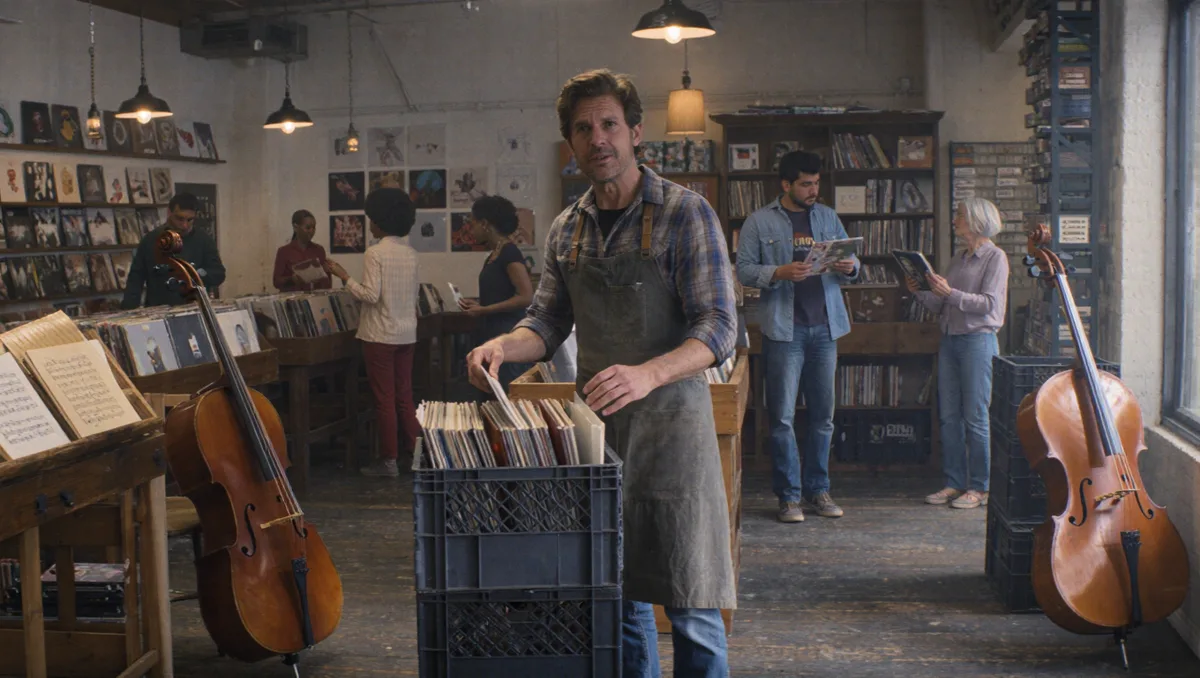
An album cover is the face a record shows the world before anyone presses play. It sets a mood, signals a scene, and often tells you who the artist wants to be. And the word itself is older and stranger than most listeners think: Merriam-Webster lists a noun sense of "cover" as simply the front of a book or magazine binding, with an example sentence about a singer posing on the album cover — the art arrived as an afterthought to the packaging, then grew into an art form of its own.
That growth tracks the technology. When records were heavy shellac discs in plain sleeves, there was nowhere for art to live. The shift to the twelve-inch long-playing record gave designers roughly a square foot of cardboard to work with, and labels started treating that space like a poster you could hold. This piece walks through how that space was used, what happened when music went digital, and what the vinyl revival means for cover design today. If you follow the business side of releases, our music news coverage tracks how labels present new records week to week. We covered a connected angle in How Music News Outlets Actually Work Behind the Scenes.
Why did album covers become art in the first place?
The short answer: the LP made it possible, and the record labels made it deliberate. A twelve-inch square is a canvas. Photographers, painters, and graphic designers could fill it with something that announced the record's attitude before the needle dropped. A jazz label could put a striking portrait on the front. A rock band could commission a surreal painting. The cover became the first impression and, for buyers in a record shop, often the deciding one. Readers following this should also see The Eras Tour Became the First $2 Billion Tour — and Reset Live Music's Numbers.
Something similar had already happened in classical music, where labels used artwork and typography to signal a recording's prestige and period. If that tradition interests you, our classical music section follows how labels package orchestral and chamber releases today. The classical shelf proved early on that a sleeve could carry authority, not just decoration.
The craft also professionalized. Designers began treating type, photography, and color as a system, so a label's releases could look related without looking identical. That is the same logic behind any strong visual identity: repetition with variation. The best sleeves from any era tend to be legible at a glance and rewarding on a long look.
What makes an album cover iconic?
Our analysis of the sleeves that endure points to three traits, none of them technical. First, a single strong idea: one image, one gesture, one joke or one mood, executed cleanly. Second, a fit with the music that feels inevitable in hindsight — the cover promises something the record delivers. Third, an image that works detached from the record, so it survives on a T-shirt, a poster, or a profile picture and keeps pointing back to the album.
There is also the band's own involvement. The records with the most talked-about covers usually trace to a musician who cared, a designer given real freedom, or both. When artists treat the sleeve as part of the work rather than a marketing wrapper, the results tend to last. Our artists coverage returns often to that dynamic, because it says as much about how a musician thinks as any interview.
What the cover does not do is rescue weak music. A great sleeve earns attention once; the record earns the replay. That is the whole trade-off, and it has held in every format era.
How did streaming change album cover design?
Digital stores and streaming apps shrank the canvas. A cover that once filled a record shop rack now competes as a thumbnail a fraction of an inch across on a phone screen. Designers responded the way you would expect: simpler compositions, bolder contrast, fewer details that would vanish at small sizes, and faces that read at a glance.
Some of that simplification sharpened the craft. A cover built to survive at thumbnail size is usually a cover with a clear idea anyway. But something was lost too. The gatefold, the liner notes, the lyric sheet, the photo collage you studied while the record spun — those experiences depended on physical space, and a streaming card has none. The sleeve stopped being an object and became an icon.
Cambridge's dictionary captures how the word stretched along with the format, defining a cover as a recording or performance of a song previously recorded by another performer — a separate sense entirely, and a reminder that "cover" in music carries meanings the packaging sense never touched (Cambridge Dictionary). Language keeps both meanings; the shelf keeps one and the playlist keeps the other.
Is vinyl bringing back cover art as an object?
The vinyl revival has put the twelve-inch square back in players' hands, and with it the physical pleasures of sleeve culture: the big artwork, the gatefold, the weight of the thing. New presses often ship with elaborate packaging that streaming cannot reproduce, and collectors buy partly for the object. The economics are honest about this — you are paying for the artifact and the ritual, not for sound quality claims that get debated endlessly and settled rarely.
For designers, the revival restored a second brief: make a cover that works as a two-inch thumbnail and as a twelve-inch object. That is a harder brief than either era faced alone, and the sleeves that solve it well tend to be the ones critics notice. When we cover new releases and reissues in this cover story series, packaging that succeeds at both sizes is one of the things we look for.
What should a player or small artist take from cover art history?
Three practical steps, drawn from the patterns above rather than any single source. One: decide the single idea first — one image, one feeling — and cut everything that competes with it. Two: test the design at thumbnail size before you commit, because that is where most listeners will first meet it. Three: think about the object if you ever press vinyl, since a gatefold or a printed inner sleeve is a chance to give buyers something streaming never will.
Budget candor matters here too. A strong concept photographed simply will beat an expensive shoot with a muddled idea, and free design tools are good enough to execute a clean concept. What you cannot shortcut is the decision about what the cover should say.
The takeaway
The album cover began as the front of a package and became a discipline: a square foot of art that previews a record, sells it, and outlives the format it was made for. Streaming shrank it; vinyl re-enlarged it; the best designers now work for both sizes at once. What the history establishes is that the sleeve has always been part of the music's meaning, not decoration on top of it. What it does not establish is any formula — every enduring cover solved its own problem once, and the next one will too.