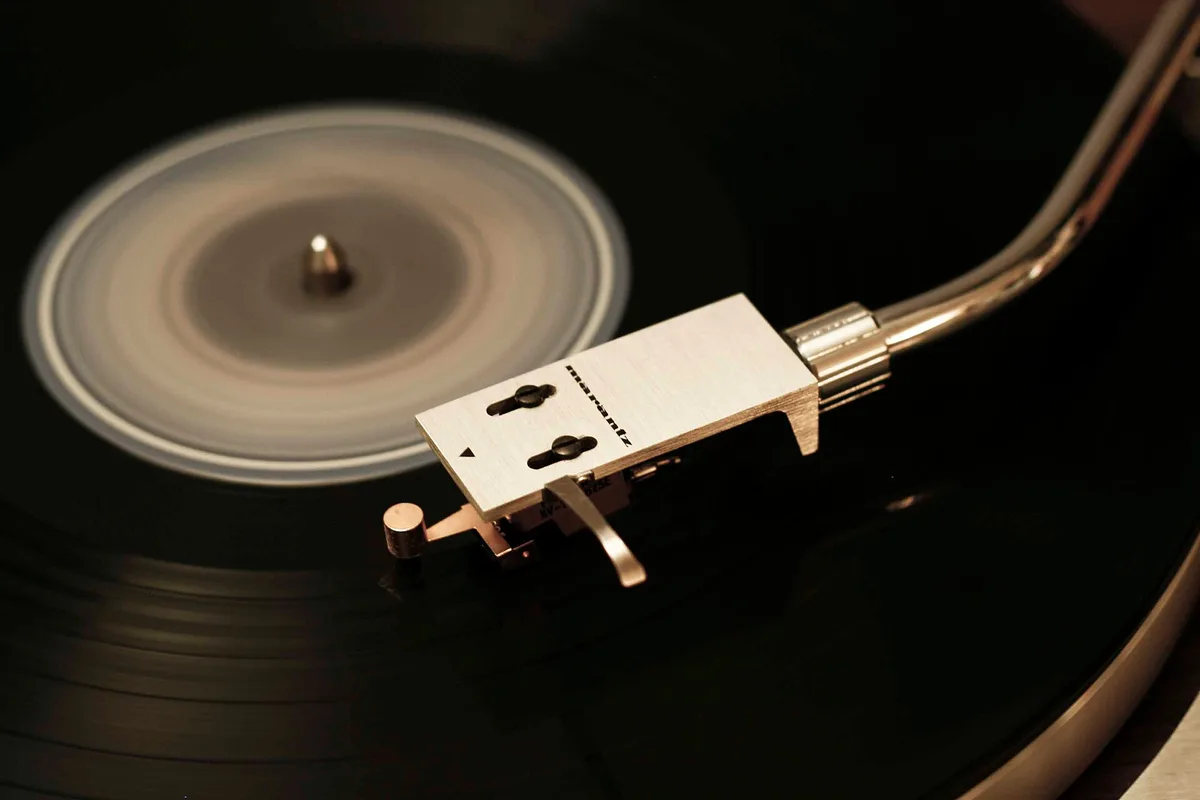
Turntable reviews are only as good as the criteria behind them. A budget deck, roughly the sub-$600 range the serious tests focus on, is a bundle of trade-offs: drive type, cartridge, preamp, and convenience features. Judge it on the wrong thing and you pay for Bluetooth you never use while the platter wows.
The good news is that the major published tests agree on more than they disagree. Per Wirecutter, which has tested more than 25 turntables and 20 all-in-one record players with both listening sessions and technical measurements, simplicity and ease of use matter as much as sound quality at this price. That single sentence is the whole framework for judging budget hi-fi, and everything below builds on it.
We read the reviews the way we listen to a recording: more than once, and for different things each time. First for the claims, then for the evidence behind the claims, then for what the reviewer avoided saying. If you want a primer on that habit, our guide on how to read a music review like a critic applies to gear writing too. Here is what the evidence supports.
What should a budget turntable review actually measure?
A trustworthy review separates what the ears catch from what they miss. Wirecutter's tester ran each deck through an external phono preamp for fair comparison, then measured output level, frequency response, distortion, speed variance, wow and flutter, and stereo balance by spinning a test LP and digitizing the signal. Those last three terms are simpler than they sound: speed variance is whether the record plays at a steady 33⅓ rpm, and wow and flutter is the wavering pitch you hear when it does not.
Why does this matter to you? Because subjective listening alone can miss a speed problem on a warm-sounding recording, and a spec sheet alone can miss a fussy tonearm. The best reviews do both, and they tell you which is which.
Which specs actually change the sound?
Four things carry the weight at this price, and the sources rank them consistently.
- Drive method. Belt-drive and direct-drive decks both passed Wirecutter's testing, so neither is automatically better. What matters is speed stability, which is measurable, not the drive type itself.
- Cartridge. This is the part that touches the record, and it is the cheapest meaningful upgrade. Wirecutter notes that if you already own a working turntable, upgrading the phono cartridge likely beats buying a whole new deck.
- Phono preamp. This small circuit boosts the record's signal so a modern stereo or powered speaker can play it. Older receivers often had one built in; most modern gear does not. A deck with a built-in preamp, like the Audio-Technica AT-LP120XUSB per WIRED, works with almost any system out of the box.
- Convenience. Auto-stop, a cue lever, and simple tracking-force dials. These do not make a record sound better, but Wirecutter valued them because a deck you enjoy operating is a deck you actually play.
Bluetooth is the spec to price honestly. WIRED's take on the AT-LP60XBT is blunt: wired analog output sounds best, because anything sent over Bluetooth has been digitally converted and may not sound its best. If wires are workable, put that money in the cartridge instead.
What do the major tests agree on?
Read across the published guides and a clear consensus forms around a few decks.
The Audio-Technica AT-LP120XUSB is the default recommendation. WIRED calls it the most iconic entry-level turntable: durable, upgradeable, with a built-in preamp and USB ripping. VinylPickup's 2026 guide, with prices verified September 27, 2026, lists it at $399 and names it the best turntable for most people, citing its direct drive and the VM95 cartridge upgrade path.
For tight budgets, the Audio-Technica AT-LP60X sits at $179 per VinylPickup's September 2026 verification, fully automatic with a built-in preamp and nothing else to buy. WIRED's Bluetooth version, the AT-LP60XBT, covers the wireless case.
One step up, the Fluance RT85N is Wirecutter's top pick, praised for accurate sound and build quality at the price; VinylPickup lists the RT85 or RT85N at $549.99 with an Ortofon 2M Blue pre-installed, and notes the RT85N swaps in a warmer Nagaoka MP-110, a taste choice rather than a downgrade.
For sound-first buyers, the Pro-Ject Debut Carbon Evo earned a 9/10 and "Best Sound for the Money" from WIRED, with a carbon-fiber tonearm and a house-made cartridge the reviewer notes typically retails for $150 alone. VinylPickup lists it at $649 as of late September 2026. Its trade-offs are real: no built-in preamp, and the platter does not auto-stop, so you walk over and lift the tonearm a couple of times an hour. We covered a connected angle in How to Choose a Guitar Humidifier: Specs, Prices, Trade-Offs.
Where do the sources disagree? Mostly on the top of the budget range. World Wide Stereo's 2026 guide crowns the McIntosh MT5 at $8,500 as its audiophile pick, which tells you a retailer's "best of" list can span two orders of magnitude. That is not wrong, but it is a different question from the one a beginner is asking.
How much should you spend on a first setup?
The evidence supports a simple ladder, and the prices below are dated because turntable prices move.
- Under $200: the AT-LP60X at $179, per VinylPickup's September 2026 verification. Fully automatic and, in their words, the cheapest deck that will not damage records.
- $200 to $500: this is where convenience and wireless features live, like the AT-LP70XBT at $299 on the same list. World Wide Stereo names the U-Turn Audio Orbit 2 Plus, with built-in preamp and Ortofon OM 5E cartridge, its best under $500.
- $500 to $700: the sound-first tier, the RT85N or the Pro-Ject Debut Carbon Evo.
One caution that recurs across every source: before buying above $200, check whether you need a separate phono preamp. VinylPickup counts four decks with one built in and five without on its list. Budget for the preamp or pick a deck that has it, or your shiny new turntable will plug into modern speakers and stay silent.
Also budget for speakers. Wirecutter points out that pairing a good turntable with a dedicated speaker system like the Andover Audio SpinBase 2 sounds much better than any all-in-one record player, but costs at least three times as much. That is the honest price of good vinyl sound, and it is worth saying out loud.
What this means: our analysis of the budget hi-fi market
Our analysis, reading the supplied tests against each other, is this: the budget turntable market is mature enough that there is no bad first purchase among the consensus picks, only mis-matched ones. The automatic decks protect beginners from tonearm mistakes. The manual decks reward patience with better components per dollar. Neither choice is a trap.
What the sources did not establish matters too. None of the supplied tests published long-term reliability data, and none measured how these decks behave under humidity swings, the kind of thing we track in instrument care guides for wooden instruments. Cartridge and stylus replacement costs appear only partly in the sources. And every price here is a snapshot: VinylPickup re-verified its list in late September 2026 and corrected several prices within a single week, which tells you how fast this market moves.
The practical takeaway: buy the deck that matches your system and your patience, not the one with the longest feature list. Then spend what is left on the cartridge. If your taste in records runs classical, our classical music coverage and our scoring method in album reviews will help you build the stack the turntable deserves.