Andrés Segovia, born in Linares, Spain, on February 21, 1893, is the reason the classical guitar has a concert career at all. Before him, the instrument lived mostly in salons and folk settings; he made his professional debut as a teenager, toured two continents, commissioned a new repertoire from serious composers, and played until weeks before his death in Madrid on June 2, 1987. The BBC's music journalists credit him with first showing the world what the guitar could do with Baroque music in the early twentieth century — a verdict from outside the guitar world, which is the kind worth quoting.
How did Segovia change what the guitar was for?
Three documented moves did it. First, transcription: he arranged keyboard and lute music — Bach above all — for the guitar, which put centuries of accepted repertoire on the instrument overnight and gave programmers a reason to book him in concert halls rather than variety bills. Second, commissioning: he persuaded composers including Federico Moreno Torroba, Manuel Ponce, Mario Castelnuovo-Tedesco, Alexandre Tansman, and Heitor Villa-Lobos to write for the guitar, and Villa-Lobos dedicated his Twelve Etudes to him. Third, teaching: his master classes, notably from 1958 at the courses in Santiago de Compostela, trained a generation that includes Christopher Parkening, and he championed the young John Williams. The instrument's modern canon was, to a remarkable degree, assembled by one man asking specific composers for specific pieces.
What did he change in the hardware?
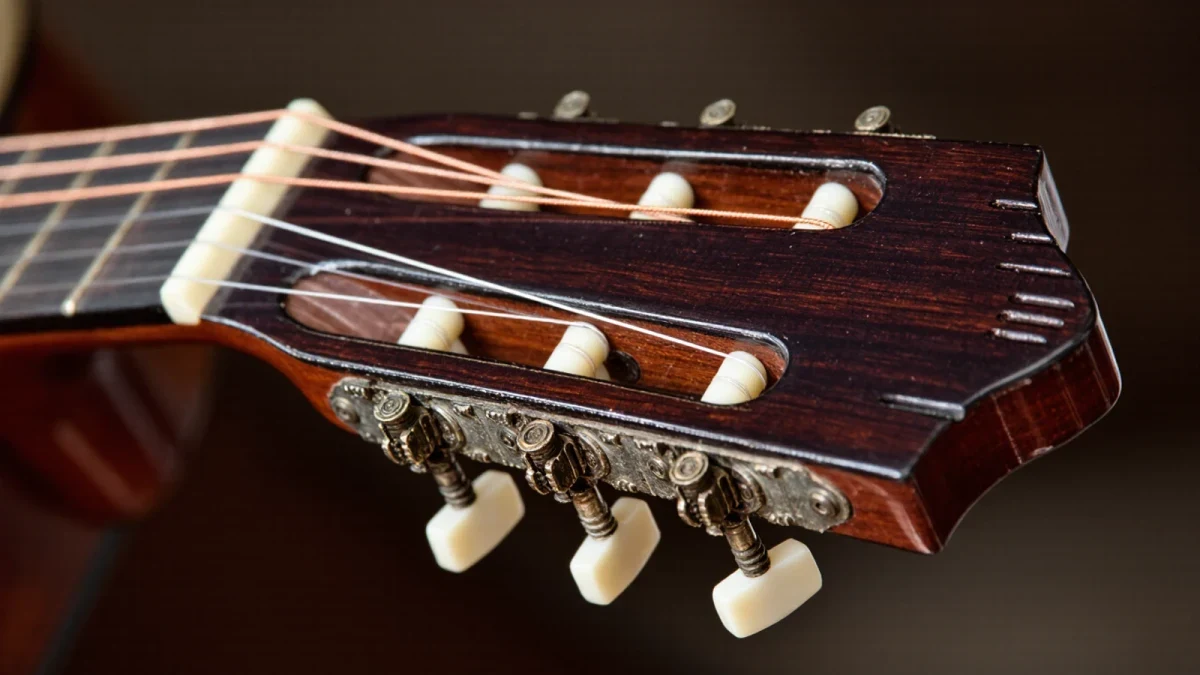
Two durable things. He worked closely with guitar makers — most famously the German builder Hermann Hauser, whose 1937 instrument Segovia publicly called the greatest guitar of our epoch, a documented remark repeated in the maker's historical records. And after the Second World War, when gut strings were scarce, Segovia's collaboration with string maker Albert Augustine helped push nylon into classical strings, according to accounts of that development published by the string industry. Every set of nylon trebles on today's market descends from that wartime substitution. That is a supply problem that permanently improved the instrument — the strings hold pitch better and survive weather that gut could not.
How did the career actually unfold?
In stages a working player can read as a lesson in patience. He gave his first public recital in Granada in 1909, at sixteen, and spent the following decade building a reputation across Spain and then South America on a 1919-20 tour. The Paris debut in 1924 put him in front of the composers and critics who mattered, and from there the itinerary never stopped: Europe, the United States, Asia, decade after decade, with a fiftieth-anniversary jubilee celebrated by the middle of the century. He was still giving master classes into his nineties. There was no single breakthrough moment on record — the career is the argument, accumulated one recital at a time for nearly eighty years.
What was the playing actually like?
Documented on a large recorded catalog spanning most of the twentieth century: a rounded tone produced with flesh-and-nail right-hand technique, deliberate rubato, and a control of color that made one guitar sound like several registers of an orchestra. His transcriptions of Albeniz's Leyenda and Granados remain reference recordings; the BBC has archived performance footage of him playing Leyenda and described him as one of the greatest classical guitarists of all time. He also won a Grammy in 1958 for the album Segovia Golden Jubilee, per Recording Academy listings — early institutional recognition for a solo guitar record. Critics in later decades sometimes found his rhythmic freedom old-fashioned next to a newer, more metronomic school; both judgments coexist in the literature, and a listener can weigh them against the records directly.
Why does a Segovia profile matter to a non-classical player?
Because the argument he won — that a solo guitarist can hold a concert hall with arrangement, tone, and repertoire — is the same argument every solo fingerstyle player from Bert Jansch to today's percussive stylists inherits. His transcription practice is also a working method: taking music not written for the instrument and making it idiomatic is still how players build solo sets. And the nylon-string guitar as it exists, in concert halls and on porches alike, carries his fingerprints in both repertoire and stringing.
What should a listener hear first?
Start with the Albeniz and Granados transcriptions for the tone and rubato, then his Bach for the transcription method, then the commissioned twentieth-century works — the Torroba sonatina and the Ponce sonatas — to hear the repertoire he built from nothing. The recordings span decades and the later ones show a Technik trimmed by age, which is itself a lesson: the document that matters is the architecture, not the execution speed. Segovia's reputation has been revisited by historians in recent years, and those debates are worth reading; none of them undo the verifiable fact that the guitar's concert life runs through him.