Elizabeth Cotten wrote Freight Train before she was a teenager, then spent decades not playing guitar at all — and still ended up a Grammy winner at about age 90. Born in 1893 near Chapel Hill, North Carolina, per the state's history office, she was a self-taught left-handed player who picked up a right-handed guitar and never turned it back: she played it upside down, bass strings toward the floor, and built an entire style on that accident. Guitarists call the result Cotten picking.
What is Cotten picking, exactly?
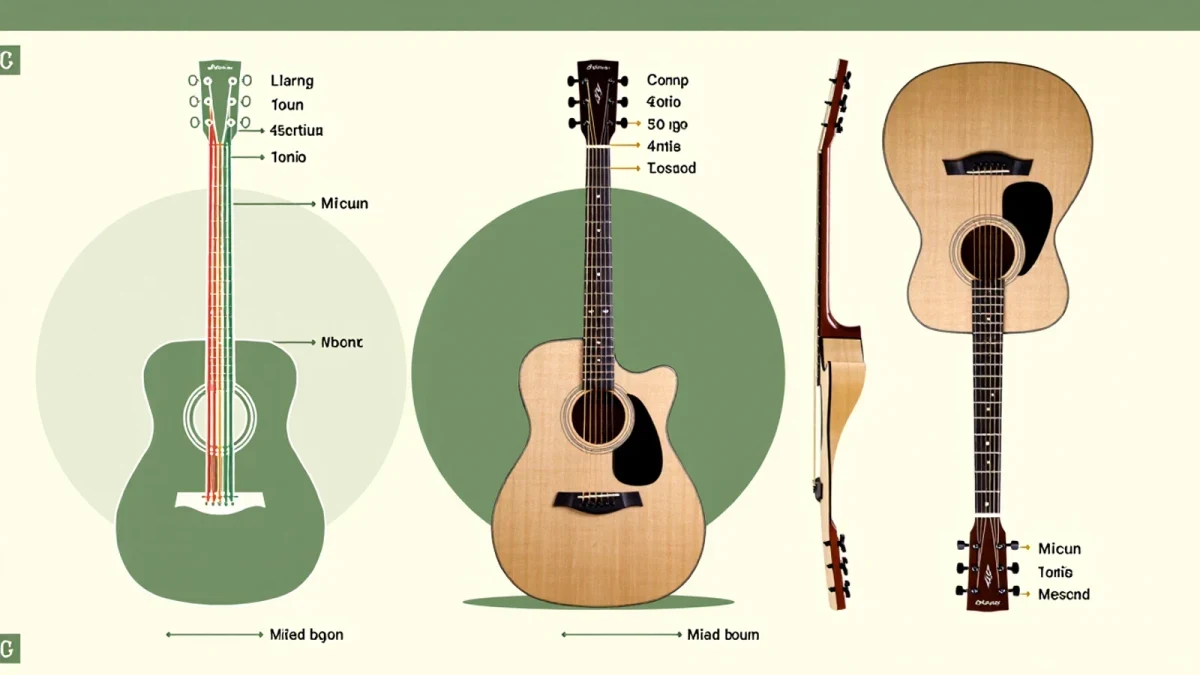
Because the guitar was strung for a right-handed player and Cotten did not restring it, her right thumb handled what became the top strings, playing the bass line, while her fingers carried the melody on what everyone else treats as the low side. The thumb alternates a bass pattern while the fingers pick the tune — a left-handed mirror of the alternating-bass idea fingerstyle players know from Travis-style playing, but with the roles physically reversed on the instrument. The technique is fully documented on her recordings, and it is why her lines have a shape other players literally cannot copy without retuning the instrument or rethinking the fingering from scratch. That is the whole trick: the constraint created the vocabulary.
How did a domestic worker end up on stage?
The documented story is one of the strangest discovery tales in American music. Cotten had quit playing in her twenties for church and family life and was working in Washington, D.C. In the mid-1940s, per accounts published by the Seeger family and folk-music historians, she was working in a department store when she returned a lost child to her family — the child was Peggy Seeger, of the folk-singing Seegers. Cotten went to work for that household, where a guitar was in reach again, and after years of not playing she picked it back up. Mike Seeger recorded her at home in 1957 and 1958, and those recordings became the album Freight Train and Other North Carolina Folk Songs and Tunes, released on Folkways. She was in her sixties when her first record came out.
What does the catalog actually hold?
The Folkways album carries the essentials: Freight Train, which she wrote around age 11 as a observation of the trains that ran near her childhood home; Shake Sugaree, sung with her great-granddaughter Brenda Evans, which later became widely covered in its own right; and the parlour-blues instrumentals that show the picking style at full speed. None of it was arranged for her by producers — the recordings document one woman, one upside-down guitar, one microphone. The songbooks and transcriptions that followed are fan and scholar work, useful but once removed from the source.
Why does the upside-down part matter to players?
Left-handed players face a documented fork: buy a left-handed instrument, restring a right-handed one, or learn on an unaltered right-handed guitar flipped over. Cotten is the permanent proof that the third path, usually treated as a mistake, can produce a style nobody planned. Her bass lines sit where other players' melodies sit, and her melody work sits where the bass usually lives, so the texture of her playing differs from ordinary alternating-bass fingerstyle in ways that are audible before they are technical. Modern left-handed players who study her recordings report that the only faithful route is to flip a right-handed guitar and accept the same constraints she did.
What recognition came, and when?
Recognition arrived late and then all at once. In 1984 she received a National Heritage Fellowship, the United States' honor for traditional artists. In 1985 her concert album Elizabeth Cotten Live! won the Grammy for Best Ethnic or Traditional Folk Recording — she was around 90 at the time, among the oldest Grammy winners on record. She kept performing into her nineties and died on June 29, 1987, in Syracuse, New York, at age 94, per the North Carolina Department of Natural and Cultural Resources' biographical entry. Freight Train outlived every dispute about it, covered by artists from Peter, Paul and Mary to Jerry Garcia's circle, and the picking style keeps her name in every serious fingerstyle conversation a century after she worked it out as a child.
What do we know about her instruments?
Less than the legend suggests. Photographs and filmed performances from her later career show her playing ordinary right-handed acoustic guitars, held left-handed without reversed stringing, and the recordings are consistent with that setup throughout. No supplied documentation identifies specific makers, models, or string choices, so any list of her guitars circulating online should be treated as unverified. What the sources do establish is the arrangement, not the hardware — and for a player studying her style, the arrangement is the entire lesson.
Where should a player start listening?
Start with the Folkways sessions, which remain available through the Smithsonian Folkways catalog, then move to the live Grammy-era recordings to hear the style with a stage's worth of confidence behind it. Guitarists who want the technique under their own hands should expect a long project: transcriptions of Freight Train circulate, but the published tab gives the notes, not the reversed hand architecture that produces them.