Michael Hedges, born on December 31, 1953, in Sacramento, California, and raised in Enid, Oklahoma, did more than anyone to make the steel-string acoustic a two-handed electric instrument. His albums for the Windham Hill label — above all Aerial Boundaries (1984) — documented a technique vocabulary of right-hand tapping, slap harmonics, and open tunings that solo acoustic players have drawn on ever since. He died on November 2, 1997, at 43, in a single-car accident in Mendocino County, California, per the Los Angeles Times' obituary report; the technique outlived him by decades and counting.
Where did the technique come from?
The documented path is classical training repurposed. Hedges studied composition as an undergraduate and pursued classical guitar training at the Peabody Institute in Baltimore, an education he described in interviews as the source of his right-hand independence and his willingness to notate and systematize what he invented. Moving to California in the late 1970s, he was signed to Windham Hill by label founder William Ackerman after being heard playing in Stanford-area venues, per label histories. The meeting of conservatory hands and steel-string wood produced the style: tapping passages with the right hand fretting over the left, artificial harmonics slapped percussively, the guitar body struck as a drum while a melody sustains above it.
What are the records to hear?
Breakfast in the Field (1981) is the solo debut, already carrying the tunings and the attack. Aerial Boundaries (1984) is the central document — the title track remains the piece most cited by players who took up the style, and the album is regularly described in coverage of the label as its acoustic milestone. Taproot (1990) folded in vocals and wider arrangements; Oracle (1996) was released just before his death and earned a posthumous Grammy for Best New Age Album in 1998, per Recording Academy listings. A final studio album, Torched, was completed from his posthumous recordings and released in 2001, per his estate's project notes.
What tunings and tricks should players study first?
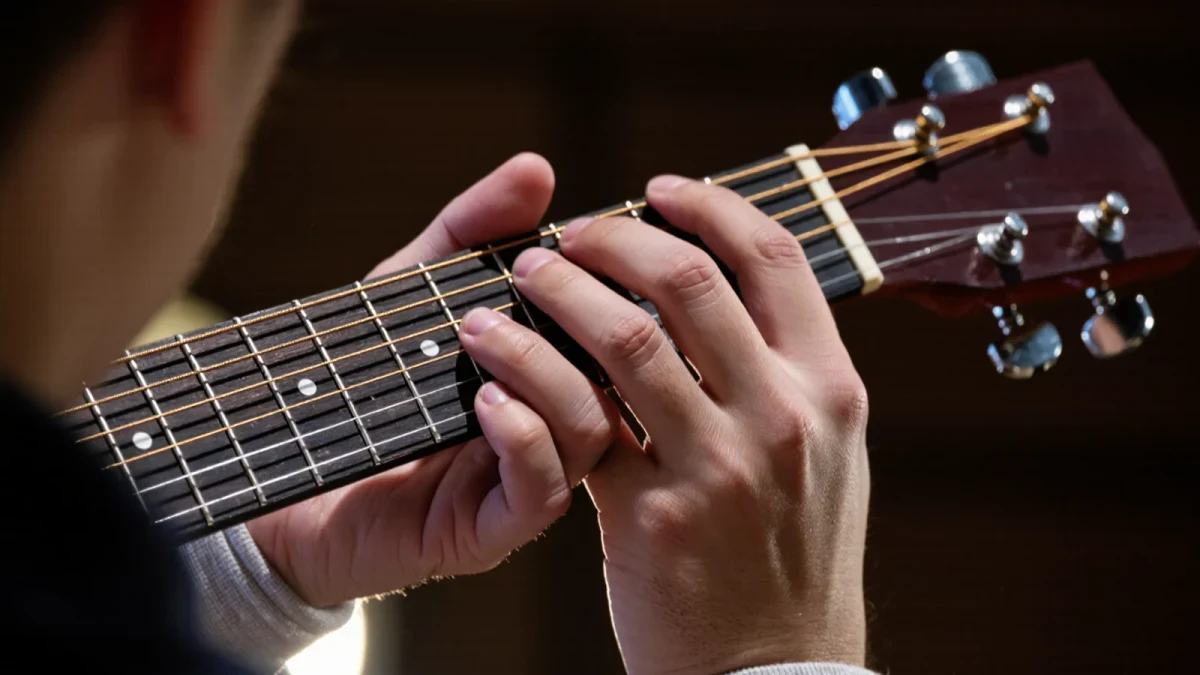
Start with the tunings, because they do half the work. Hedges's originals sit in open and modified tunings with the low strings dropped well below standard — the drone strings under two-hand tapping is what lets one player sound like a rhythm section. Published transcriptions of Aerial Boundaries and Rickover's Dream circulate widely and carry the tunings at the top of the page. The slap harmonic — striking a natural-harmonic node with the right hand while the left holds the fret — is the signature sound, and it is a technique of angle and release that most players need weeks to land cleanly. Two-hand tapping on acoustic needs low action and clean fretwork to speak at all; a cheap setup fights the style at every step.
How do you practice the style without injuring your hands?
Slowly, and with the setup doing its share. The two-hand vocabulary asks the right hand to press strings to the fretboard with fingertip force it never developed holding a pick, so players who attempt the pieces at tempo in week one commonly strain the hand and quit. The sensible documented route is the one his own transcriptions imply: learn the left-hand bass part alone until it is automatic, add right-hand taps one string at a time, and keep the action low enough that the tapping hand is not fighting the string. Teachers of the style also recommend starting the slap harmonics on the twelfth-fret nodes, where the harmonics ring most easily, before moving inward. Nothing in the method requires strength; it requires timing, and timing is patience under another name.
What gear is on the record?
Hedges played custom steel-strings built by luthier Steve Klein for much of his career — instruments whose extended fret access and amplified setups suited the two-hand work — and in his final years he took up the harp guitar, heard on Oracle and the posthumous Torched material. He amplified with pickups and rack effects documented in his later touring rigs, per period equipment coverage. As always with player profiles, specifics beyond named, dated sources should be treated as collector talk; what the recordings prove is hands, wood, and tunings.
Why does he matter to players who never bought a Windham Hill record?
Because every percussive-tapping acoustic video of the past two decades runs on rails he laid. The now-standard solo-acoustic show — one player, one guitar, generating bass, percussion, and melody simultaneously — was a niche oddity before Hedges and a genre after him. University guitar ensembles program his arrangements; a Purdue University archive's campus-paper record documents his concert reach during his lifetime, and student recital programs carry his pieces today. He belongs in the same sentence as the Takoma-school players and the British folk guitarists in this magazine's other profiles: a self-contained system, built on a trained hand, that changed what listeners assume one acoustic guitar can do.