Start with pieces that tell a story, keep each listening session short, and let the child pick what to replay. That is the whole method. A four-minute tone poem with a wolf in it beats an hour of polite applause every time.
The word itself helps here. To introduce, per Cambridge Dictionary's entry, is to present one thing to another so they become acquainted — and acquaintance is exactly what you're building. You are not teaching history or theory. You are making two strangers comfortable: a child and a sound world.
The trap most parents fall into is sequencing. They start with the long, serious works and wonder why attention drifts by minute three. Flip it. Start where the music already behaves like a cartoon.
Why story-driven program music works first
Program music is instrumental music written to describe a scene, a character, or a plot. The composer hands you the story in the title, so nobody has to explain anything before the first note. The child hears a bird, a thunderstorm, or a marching elephant and knows instantly what they're hearing.
A few pieces carry decades of first-listener duty for good reason:
- Peter and the Wolf — Prokofiev gives each character its own instrument, so the story and the orchestra get learned at the same time.
- The Carnival of the Animals — Saint-Saëns paints lions, elephants, and a famously slow tortoise in short movements, most under three minutes.
- In the Hall of the Mountain King — Grieg builds from a sneaky little tune to a full chase. Kids ask for the loud part again.
- Sorcerer's Apprentice — Dukas wrote a broom that won't stop fetching water. The plot is audible without a single word.
Notice the common thread: each piece has a character to root for and an ending to wait for. That's the same hook as any good bedtime story, just played instead of read.
How short should a first listening session be?
Shorter than you think. A single movement, or one story piece, is a complete session for a young listener. If they ask for it again, play it again — repetition is the child doing the work of learning, not a sign you failed.
A practical rhythm that tends to hold: one piece at breakfast or in the car, same piece for a few days, then swap. Familiarity first, variety second. When a piece has clearly landed, that's the moment to play something by the same composer or the same instrument and see if the interest travels.
What this means for your calendar: you don't need a music hour. You need a music minute, most days, at a predictable time. Predictability does more for a young listener than novelty does.
What do you actually do while it plays?
Give the listening a job. Not a worksheet — a game. The options below all ask the child to notice something specific, which turns passive background sound into active hearing.
- Spot the instrument. In Peter and the Wolf, guess who's coming on stage when the oboe plays. Guess wrong cheerfully; guessing is the point.
- Draw the story. Play a movement from Carnival of the Animals and draw what it sounds like. The pictures tell you what the child actually heard.
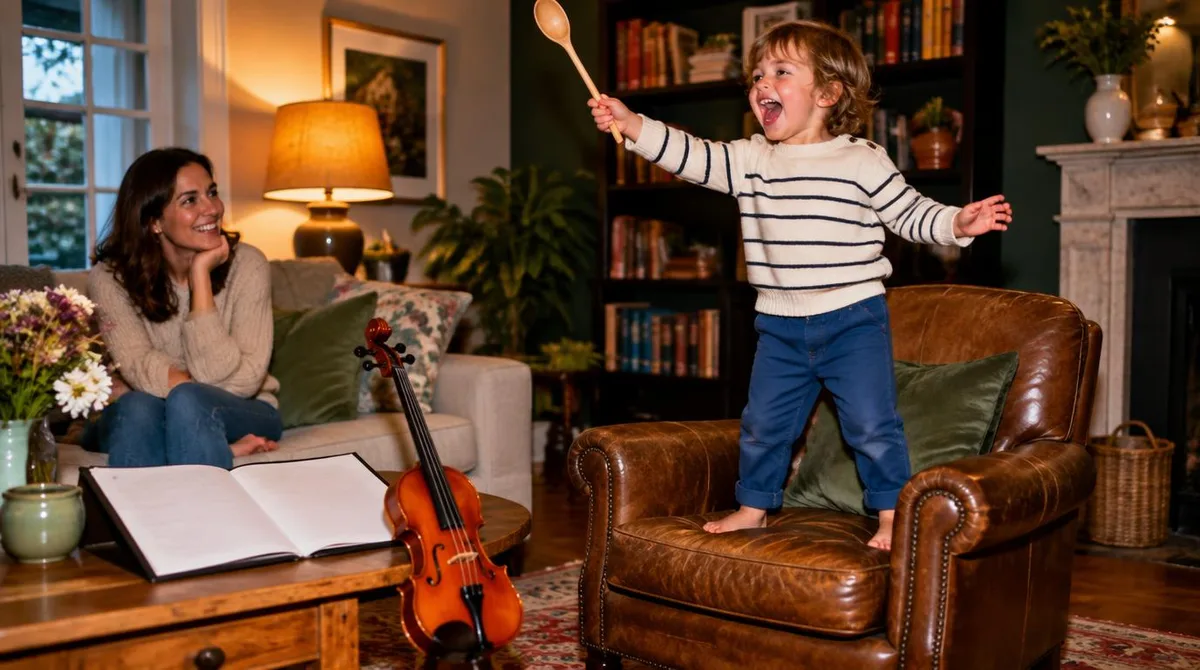
- Move to it. March to a march, tiptoe to the sneaky bits. Big physical movement is how many kids process music first.
- Find the loud part. Ask where the music gets biggest, then rewind to just before it. You've just taught dynamics without the vocabulary.
Then talk, briefly. One question is plenty: "What did that sound like to you?" Their answer is often stranger and more accurate than any program note.
When do longer pieces and live concerts fit in?
When the child asks, not before. The bridge from story pieces to longer works runs through the movement. Explain that a symphony is like an album: several shortish songs, and you're allowed a favorite. Pick one movement, play just that, and the length problem disappears.
Live music lands differently, and earlier than many parents expect, because the instruments themselves are the show. A hall where a timpani hit hits you in the chest sells the whole art form in one go. Many orchestras run family or youth concerts built around exactly the story pieces above; look for one with demonstrations of the instruments. Our guide to Where to Hear Classical Music in Boston Year-Round shows what a year of options looks like in one city, and the same logic applies wherever you live.
Radio and curated streams help in the gaps. A station that mixes short classics into a day's listening keeps the sound world familiar between your deliberate sessions — see our roundup of The Best Classical Music Radio Stations in Boston for how that works in practice.
One caution: don't oversell. If every listen is framed as Good For You, kids smell a vegetable. Your job is to keep good music in the room and stay quiet about its nutritional value.
Where the road leads — and what to expect
Expect a slow burn with sudden jumps. Weeks of one piece, then a random obsession with an oboe. That's normal and better than a smooth curve. The interest builds on whatever the child chose to love, so follow their thread even when it runs through the silliest movement on the shelf.
As the listening habit settles, the natural next steps are context and vocabulary. Our Beginner's Map to Understanding Classical Music Forms gives you the plain-language terms — sonata, rondo, theme and variations — so the child's questions get real answers. And if the interest ever turns toward making sounds rather than hearing them, the nylon-string classical guitar is a forgiving first instrument; our guide to Classical or Steel-String: How to Choose covers that fork in the road.
What the evidence here doesn't settle is any single right age or any guaranteed outcome — no supplied source measures that, and honest guides don't pretend otherwise. What's durable is the method: stories first, minutes not hours, repetition without apology, and one good question after each listen. Do that, and you're not filling a child with culture. You're handing them a lifelong listening habit, one wolf at a time.