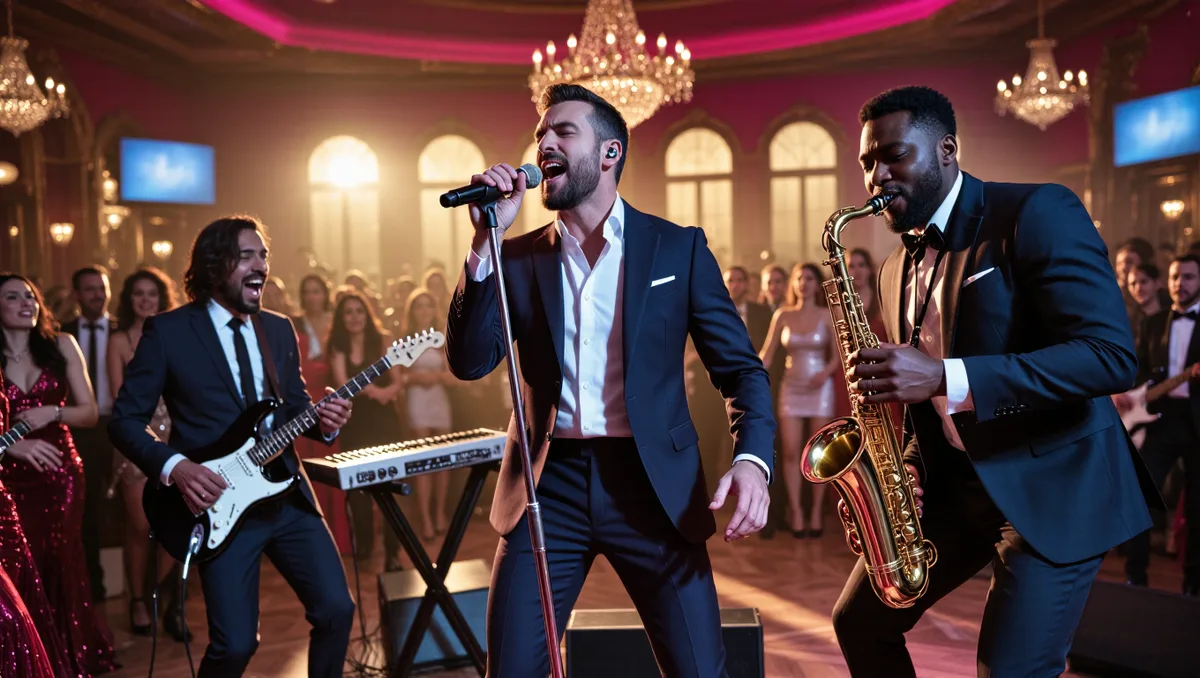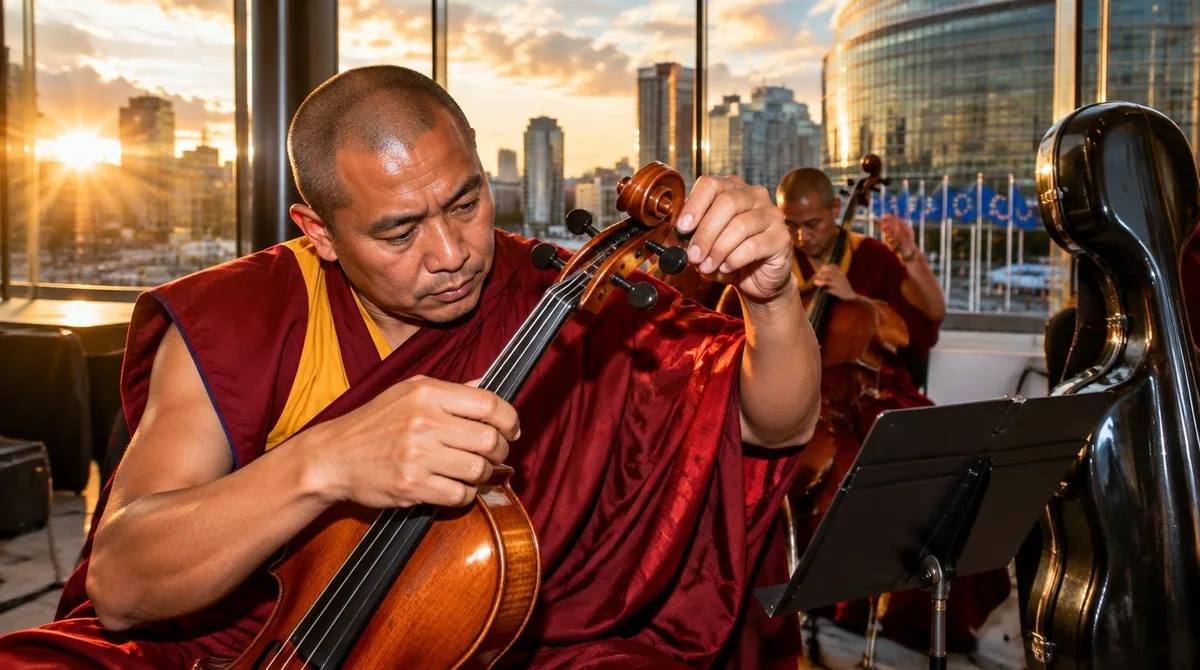
Music gets drafted into diplomacy more often than most players realise. The latest example: a conference called Voices of Peace: Music, Culture, and Mutual Understanding, hosted in Brussels by the European Committee of the Regions, followed by a concert from the WuLe Symphony Orchestra under Maestro Shi Wule, per the Committee's event page.
The orchestra carries a claim worth pausing on. Per the event listing, it is described as the world's largest symphony orchestra composed entirely of Buddhist monks. Whatever your view of such labels, the programming logic is familiar: put musicians with an unusual story in a room where politicians and cultural representatives already sit, and let the performance carry the argument. That is the durable idea behind this news, and it is worth unpacking for anyone who plays.
Music has always travelled where words struggle. If you follow the classical side of the craft, our Classical Music coverage keeps landing on the same pattern: ensembles and festivals reaching past their usual rooms. This Brussels event is the pattern at institutional scale. We covered a connected angle in Music: Fort Smith Symphony's Opener Shows Why Regional Classical Season Announcements Matter.
What is actually happening in Brussels?
Per the event page, the Centro per l'interscambio e lo sviluppo culturale Italia-Cina (ICCX) organised the gathering as part of the World Peace Culture & Arts Festival 2026. The morning programme is a roundtable on the role of culture and the arts in promoting peace, dialogue and cooperation between peoples. Members of the European Committee of the Regions, cultural representatives, artists and invited guests attend, running 09:30 to 17:30 Brussels time.
The afternoon belongs to the music. The WuLe Symphony Orchestra performs a special Concert for Peace in Atrium 5, directed by Maestro Shi Wule. The stated aim, per the listing, is to build bridges between cultures and convey a shared message of peace, friendship and mutual understanding.
One detail in the listing deserves a note. The Committee states plainly that it is hosting the event but is not responsible for its content. That line is standard institutional practice, and it tells you something honest about how these events work: the host lends a room and a platform, not an endorsement of every claim made on stage.
Why does an orchestra of monks matter to the idea of cultural diplomacy?
Strip away the setting and the mechanism is simple. A roundtable can discuss cooperation; an ensemble can demonstrate it. A group of musicians who live under one discipline, playing together under one conductor, makes the abstract case for dialogue in a way a panel cannot. The event's own framing, per the listing, leans on exactly that pairing: dialogue in the morning, music in the afternoon.
For working players, the takeaway is not exotic. Any ensemble that rehearses seriously already knows the experience: a room of people who disagree about everything else agreeing, bar by bar, on where the downbeat lands. Diplomatic programming simply scales that room up and gives it stakes.
What can ordinary musicians take from this?
Three practical readings, all grounded in what the event itself models.
- Programme with intent. The Brussels event pairs discussion with performance rather than treating the concert as decoration. Community ensembles can borrow the shape: a short talk, a Q&A, then the music, so the audience arrives with context.
- Partner outside your usual circle. A regional committee building hosting an orchestra organised by an Italian-Chinese cultural exchange body is, per the listing, an alliance across institutions that rarely share a stage. Local equivalents exist everywhere: libraries, universities, faith communities, sister-city groups.
- Name the message once, then let the playing carry it. The event's stated aim is peace, friendship and mutual understanding, stated once on the page and then entrusted to the concert. That restraint is a craft lesson for anyone programming a benefit night.
If you are building a player's path towards this kind of work, the fundamentals do not change. Solid reading, steady ensemble skills, and the patience to rehearse with people unlike yourself. Our guide to reading sheet music on guitar covers the first of those, and a structured classical practice routine covers the rest. Readers following this should also see How to Build a Classical Practice Routine.
What the sources do not tell us
Honesty about gaps is part of the job. The event listing establishes the participants, the schedule, the venue and the stated aims. It does not tell us the concert programme, the orchestra's size in numbers, the repertoire, or whether the roundtable produced any agreed outcome. The "world's largest orchestra of Buddhist monks" claim is the organiser's own framing as printed on the event page; no independent measurement was supplied. Treat it accordingly.
The venue, for those who might attend, is the Committee of the Regions building on Rue Belliard 101 in Brussels, with the performance in Atrium 5 on the fifth floor, per the listing.
Where this idea goes next
Events like this one keep appearing because the underlying bet keeps being made: that a concert can do diplomatic work a communiqué cannot. Whether the bet pays off is not something a single afternoon can prove, and the sources here do not claim it does. What they do show is institutions with real platforms choosing to spend an afternoon on music rather than on another statement. For players, that is the signal worth reading. The stage is already recognised as a diplomatic space. The only question is who fills it, and how well they play.