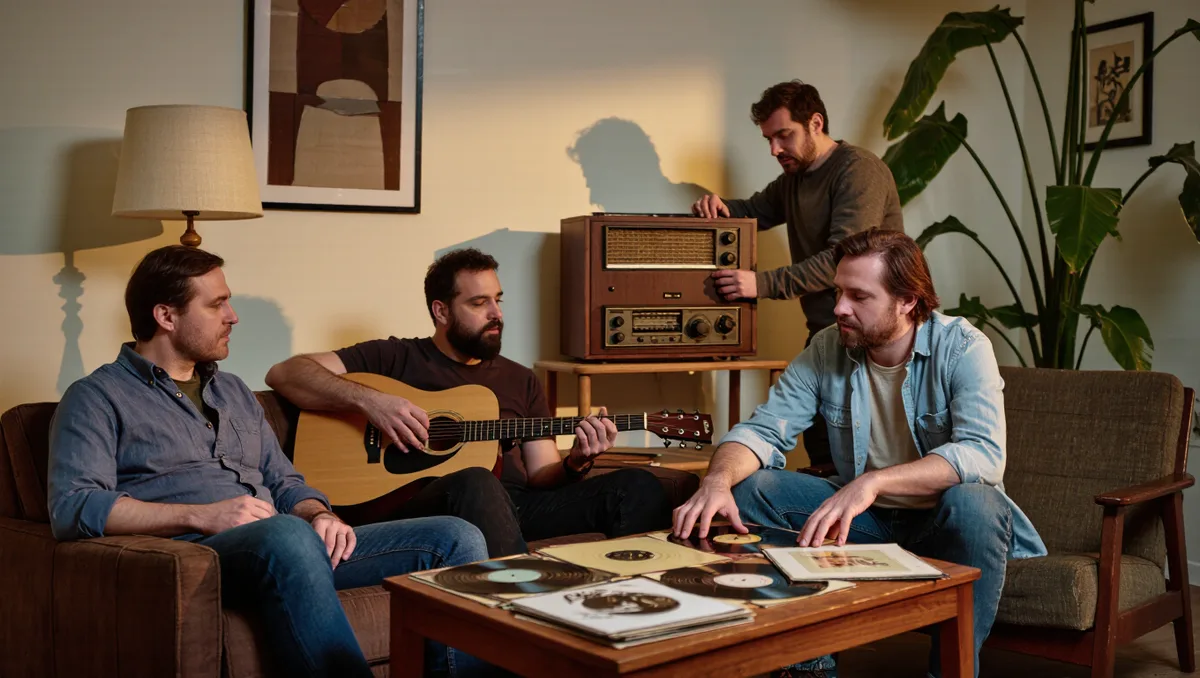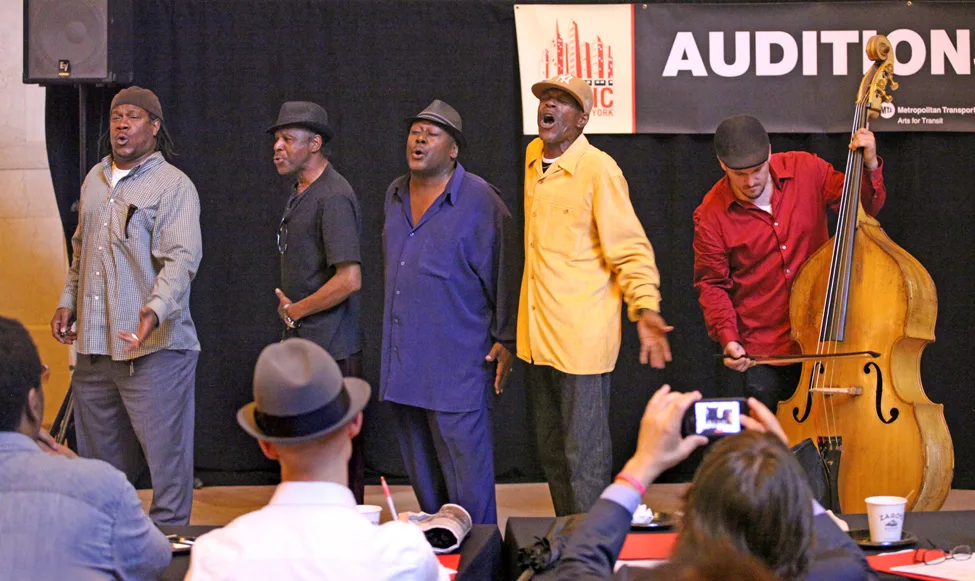
A great cover answers a question the original never asked. A karaoke rehash answers nothing. It stands in the original's shadow, copies its phrasing, and hopes the song carries it. Artists covering other artists at a high level do the opposite: they treat the song as raw material and rebuild it around something they own, whether that is a right-hand attack, a tuning, or a whole different emotional temperature.
That is the short version. The longer version is about craft, and it is learnable. The players who cover well tend to change one or two load-bearing things — key, groove, texture, arrangement — and leave the melody's bones alone. Change everything and it stops being the song. Change nothing and it stops being yours.
It is worth saying that this tension between influence and originality is not unique to music. Writing about the visual arts, My Modern Met notes that many of history's most famous artists were not recognized for their talents until decades after their death, and that fame often came from a distinctive style or participation in a pivotal movement rather than from technical copying. The same reading applies on stage: the covers that last are the ones where the covering artist's own style is unmistakable within the first eight bars.
What separates a cover from a karaoke rehash?
A cover makes an argument. A rehash makes a photocopy. When an artist covers a song well, they are saying something about it: this song works at half the tempo, this lyric lands harder over a solo guitar, this chorus was hiding inside a wall of production. The listener hears both the original and the critique at once.
The practical test is simple. Strip the cover back to its bare parts and ask what the covering artist changed on purpose. If the answer is nothing — same key, same groove, same dynamics, same fills — you are listening to an impression. If the answer is one deliberate, audible decision, you are listening to an interpretation.
There is also an honesty test. The best covers do not flatter the original; they interrogate it. That is why a quiet, sparse take on a loud song can feel more revealing than the record itself. The covering artist has room to hear what the production was covering up.
What do the best covers actually change first?
Almost always, the rhythm. Before anyone touches the melody, the good covers move the pulse. A shuffle becomes a straight four. A ballad becomes a groove. The melody stays recognisable, but the body of the song has been rebuilt.
For guitarists, the second lever is tuning and voicing. Our piece on Keith Richards and Open G covers how five strings changed rhythm guitar, and the same logic powers great covers: an open tuning forces new voicings of a familiar chord progression, so even a note-for-note faithful melody arrives in unfamiliar clothing. The song sounds reborn without a single rewritten line. Readers following this should also see Keith Richards and Open G: Why Five Strings Changed Rhythm Guitar.
The third lever is texture. Solo voice and one guitar is the most common rearrangement for a reason: it removes everything that can hide a weak lyric. If the song survives unplugged, the interpretation has found something true in it. If it does not, the covering artist has learned something the original's arranger already knew.
Which artists built reputations partly on other people's songs?
More than the purists like to admit. The folk and blues revival ran on reinterpretation, and much of the electric blues canon travelled through players who first heard it second-hand. Our profile of Sister Rosetta Tharpe traces how gospel material, filtered through her electric guitar attack, fed directly into what later got called rock and roll. Much of that lineage is covers all the way down — songs passed between players, each pass leaving fingerprints.
Jazz is the most extreme case. The standard repertoire is, by design, a shared songbook: everyone plays the same tunes, and the art lives in the treatment. Our profile of Wes Montgomery describes a player whose signature octave approach could make any pop tune of the day sound like his own composition. In that tradition, covering is not a fallback. It is the form.
Folk fingerstyle works the same way. The Bert Jansch lineage is full of traditional material rearranged until the arrangement became the identity. When listeners say a player "owns" a song, they usually mean the arrangement has become more famous than the source.
How do you cover a song without copying it?
Start by deciding what the song is really about, in one sentence. Then choose the two or three musical decisions that serve that sentence and change them. Everything else stays. This is the discipline most rehashes lack: they change things at random, or not at all, because they never made the decision in the first place.
A workable sequence:
- Learn the original properly — form, key, feel, and the reason the arrangement works.
- Write the one-sentence reading of the song. If you cannot, you are not ready to cover it.
- Change one load-bearing element: tempo, key, groove, or instrumentation. Play it through.
- Change a second only if the first created a problem the song now has.
- Stop. Two deliberate changes read as a voice. Six read as a medley.
For players working out arrangements, technique choices matter as much as theory. Our guide to fingerstyle versus flatpicking covers how the right hand alone can reframe a song, and the string choice behind that tone is its own decision — the trade-offs are laid out in our nylon versus phosphor bronze comparison. We covered a connected angle in Nylon vs Phosphor Bronze Strings: Sound and Feel Trade-Offs.
When does a cover outlive the original?
When the interpretation becomes the default. In several well-known cases across pop, rock, and soul, the version most people know is not the first recording — the cover simply became the way the song is remembered. That happens when the covering artist's reading is stronger than the original's execution, or when the original's moment passed and the cover arrived at the right time with the right voice.
Our analysis: the covers that transcend share one trait. They respect the song more than they respect the recording. The song is treated as a living thing that can survive a transplant; the recording is treated as one historical reading of it. Players who reverse that order — treating the record as sacred — produce the photocopies. Players who hold both at once, melody intact and treatment rebuilt, produce the versions that keep getting covered themselves.
What the evidence here does not settle is whether a transcendent cover needs commercial success. Plenty of interpretations that working musicians cite as definitive never charted. What the pattern does suggest is that longevity follows distinctiveness: the cover that sounds like nobody else is the one that keeps getting learned.
The takeaway for players
If you cover songs live — and most gigging players do — the move is not to avoid covers. It is to make each one carry a decision the audience can hear inside a verse. Change the groove, change the voicing, change the temperature. Keep the melody honest. A cover that makes an argument gets remembered; a cover that makes a copy gets tipped.