Can a singer actually sing? The honest answer: listen to the raw takes, not the reputation. Some artists deliver steady pitch with nothing but a microphone and a room. Others lean on tuning software, layered vocals and a producer's patience. Both can make records you love. Only one of them tells you what happens when the plug gets pulled.
This piece sorts the two groups apart without naming names we can't back up. The tools of modern vocal production are real and widely used. So is plain, uncorrected singing. The trick is knowing what to listen for — and the word artist itself has drifted a long way from where it started. As the Tate's A–Z of artists shows, the term's core roster runs from painters to printmakers; music borrowed the word later, and with it came the assumption that fame and technical skill travel together. They don't.
The same drift shows up in how we talk about singing. A voice that moves you and a voice that hits every note are two different things, and the music world keeps confusing them. Here's how to hear the difference — artists across every genre get judged by the same basic tests.
What does "can sing" actually mean?
Strip away taste and the question gets technical. A singer who can sing does three things reliably: they land close to the intended pitch, they hold time with the band, and they control volume and tone on purpose rather than by accident. None of that requires a huge range or a big voice. It requires consistency.
Notice what's missing from that list: power, rasp, whistle notes, a four-octave range. Those are style choices, not skill. A quiet, narrow singer with dead-accurate pitch can sing. A shouty belter who drifts flat on every phrase, every night, cannot — whatever the tickets cost.
There's also the craft layer: breath support, phrasing, knowing when not to sing. That's the part audiences feel without being able to name it. It's why a technically modest singer can sound authoritative while a technically flashy one sounds like a demonstration.
How does pitch correction actually work?
Pitch correction is software that detects the note a singer sang and nudges it toward the note they meant to sing. Used gently, it's retouching: it cleans the edges of a take that was already mostly there. Used hard, it becomes an instrument of its own — the hard-snapped, robotic effect you can hear from across a room.
Two things matter for judging a singer. First, the tool works note by note, so it doesn't fix rhythm, breath, phrasing or conviction. Second, it works best on small corrections. A vocal that needs large moves tends to sound processed, which is why heavy tuning is usually a stylistic decision rather than a rescue.
Live, the same software can run in real time through the front-of-house rig. That means a polished live vocal no longer proves much on its own. It also means a rough live vocal proves a lot — nobody left that wobble in by mistake.
How can you tell a live take from a studio build?
Listen for the things software doesn't do. Breath noise that matches the phrase. Pitch that sags slightly at the end of long notes as air runs out. Consonants that land a hair early or late. Small, human imperfections are the fingerprint of a real take; too-perfect tuning plus too-perfect timing usually means a comped, tuned, quantized build.
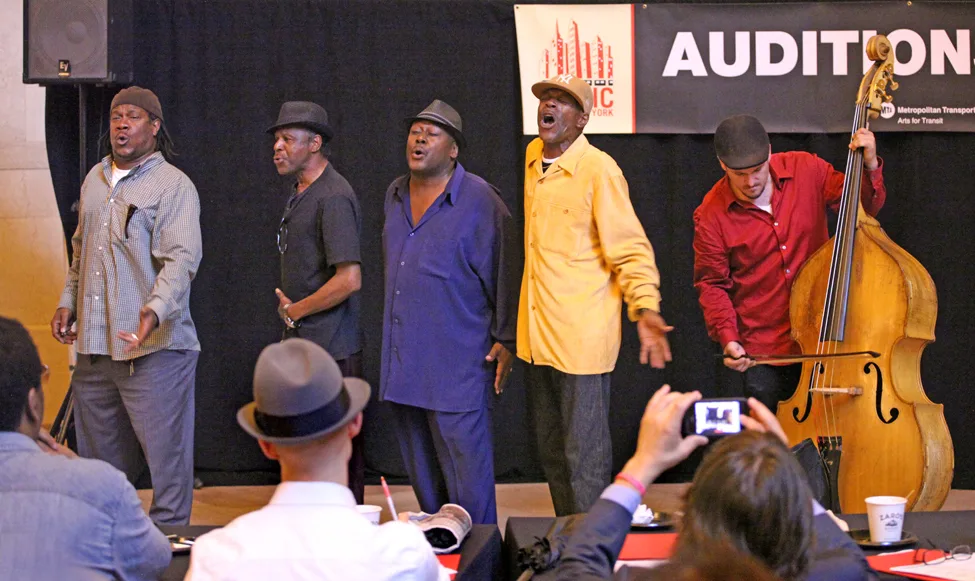
Live recordings give you another test: does the singer change the melody night to night? Improvisation, ad-libs and rephrased lines are hard to fake, because they require the singer to invent in key, in time, on the spot. A singer who can vary a melody convincingly can sing. That's our read of the evidence, and it's the single most reliable test available to a listener with no plug-ins.
One caveat: a bad night is a bad night. Voices tire, rooms fight back, monitors fail. Judge a singer on a body of live recordings, not one YouTube clip.
Why does the "can't sing" label stick to some artists?
Because the label does two different jobs, and only one of them is about pitch. Sometimes it's literal: a voice that drifts, cracks and searches for notes. More often it's a taste verdict dressed up as a technical one — the voice is unusual, nasal, thin or plain, and listeners call that "can't sing."
The honest framing separates the two. An unconventional voice with real control is a skilled singer with a divisive sound. A conventionally pretty voice with no control is a nice instrument played badly. History keeps rewarding the first group, because distinctiveness outlasts polish. The same pattern runs through instrumental music — think of the players profiled in Elizabeth Cotten: Playing It Upside Down or Wes Montgomery: The Case for the Thumb, whose self-taught techniques would fail a conservatory exam and outlasted everyone who passed one.
What this means for you: when someone says an artist can't sing, ask which claim they're making. Pitch, or taste? The answer changes how much the verdict is worth.
How should you judge a singer for yourself?
Practical steps, in order:
- Find a live take with no obvious backing track. Solo with a guitar or piano is the cleanest test.
- Listen to the ends of phrases. Pitch control fails at the end first. Do the last notes sit in key?
- Check the quiet parts. Anyone can be loud. Singing softly, in tune, with the note still supported, is the harder skill.
- Compare two performances of the same song. Consistency across nights is the real tell.
- Separate the writing from the singing. A great songwriter with a limited voice is a great songwriter. Judge the singing on its own terms.
None of this needs equipment or training. It needs attention, and a willingness to hold a verdict until you've heard more than one take.
Where does this leave the debate?
The evidence supports a boring but useful conclusion. "Can sing" is a testable set of skills — pitch, time, control, consistency — and the studio can obscure them but not replace them. "Can't sing" is usually a mix of a real technical verdict and a taste complaint, and the two get blended until nobody knows which was meant. The word artist has already stretched to cover painters and pop stars alike; as My Modern Met notes in its survey of famous artists, fame and recognition often arrive decades apart, which is a reminder that public verdicts lag the actual work.
So judge the record, not the reputation. Hear the raw takes where you can. And when the tuning is unmistakable, weigh what's left: the phrasing, the timing, the choices. That residue is the singer. Everything else is the machine.