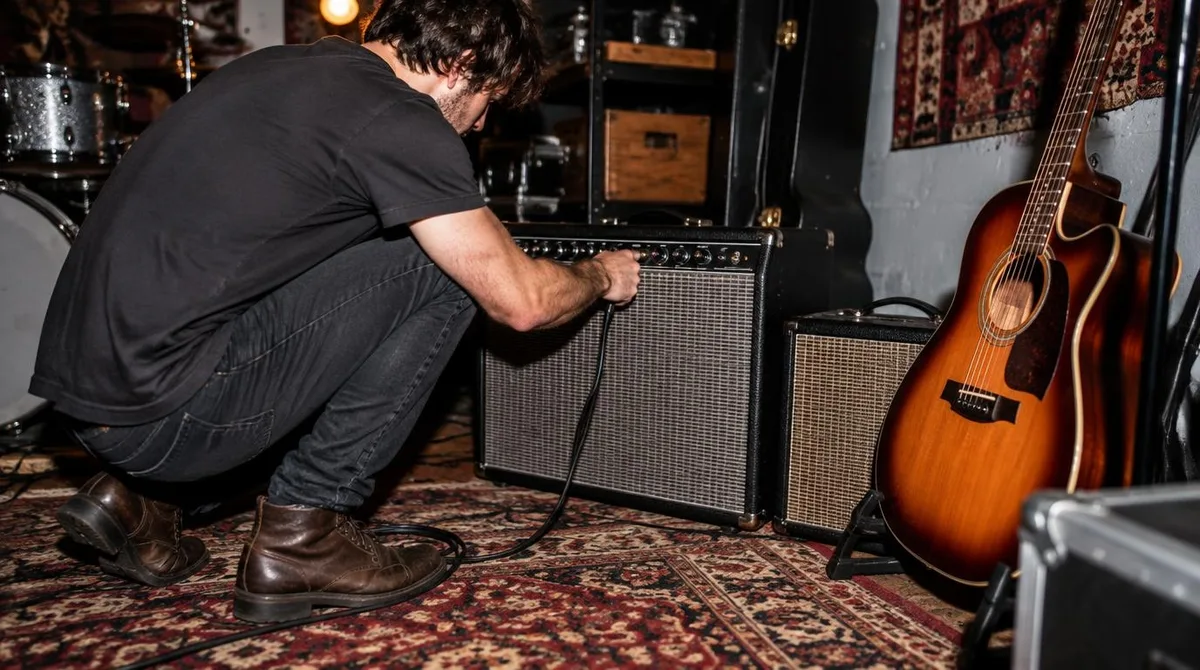
An acoustic guitar amp is a small PA dressed as a combo: it has to reproduce the voice of your top as honestly as it carries your mids, and it has to survive a car park load-in. The features that decide whether it works are the same four every time — channels, DI output, feedback control, and weight. Get those right for your venues and the rest of the spec sheet is garnish.
There is a wrinkle worth naming up front. Many players gig with portable amps that were not built for acoustic guitar specifically, and the buying logic still overlaps. According to Rolling Stone's portable amp guide, the core checklist is amp type, power, inputs and outputs, and built-in effects — and that checklist transfers almost word for word to the acoustic-amp aisle.
This guide walks that checklist section by section, then compares the portable models the supplied evidence covers, with prices as of the guide's January 2023 publication. Where the sources did not establish something — dedicated acoustic-amp measurements, for instance — we say so plainly. If you are also weighing a pickup-equipped instrument to plug into it, our electric-acoustic guitars sourced guide covers the other half of the signal chain.
What does an acoustic guitar amp actually need to do?
It needs to amplify a wide, flat signal without colouring it. An electric amp is voiced to add character; an acoustic amp is voiced to stay out of the way. That is why the feature list looks more like a PA's than a guitar amp's: multiple channels, a line out or DI for the house system, and some means of taming feedback.
Two channels matter more than they first appear. One input for the guitar, one for a vocal mic, and a solo or duo gig suddenly fits through one box. Rolling Stone's guide makes the same point in general terms: some amps carry multiple inputs, which lets you connect more than one instrument or even use the amp as a small mixer. On a dedicated acoustic amp, a second channel with its own volume — and ideally its own EQ — is the feature to insist on if you sing.
The DI or line output is the quiet hero. Bars and festivals rarely let you mic your amp. They want a line from it. An amp with a proper line out sends your sound to the house PA while the combo on stage keeps you and your bandmates honest. Without one, you are relying on a microphone in front of the speaker, which is a fragile thing at a loud room's mercy.
How much power do you actually need?
Match the wattage to the room, not to the fantasy of the room. Rolling Stone's buying guide frames it directly: a lower-wattage amp suffices for small gigs and home practice, while bigger venues need more wattage to reach the back row. The guide's own yardstick — that 40 watts should carry a good-sized crowd while 20 watts and under keeps coffeehouse patrons happy — is a reasonable starting scale for acoustic work too, where you are pushing a cleaner, wider signal that clips less gracefully than a distorted electric one.
Clean headroom is the real variable. A distorted electric amp can hide a weak power stage; an acoustic amp cannot. If you play unamplified-quiet fingerstyle in a listening room, the low end of the scale is plenty. If you strum hard with a drummer behind you, take the higher figure and thank yourself at soundcheck.
On amp type, the same guide notes the broad trade: solid-state amps use transistors, tend to be more reliable and less expensive, while tube amps are often preferred for a warmer, more natural sound. For acoustic reproduction, most players land on solid state for the headroom and the weight. That is a generalisation from the source's framing, not a measurement — no supplied test compared the two for acoustic tone specifically.
What about feedback control and tone shaping?
Feedback is the acoustic amp's permanent houseguest. A hollow body under a loud speaker is a loop waiting to close, so look for the tools that break it: a notch or anti-feedback control, a phase switch, and a sweepable EQ rather than a single treble knob. Rolling Stone's guide covers the tone-shaping side of this — reverb, delay, EQ and gain as the controls worth having on the panel — and those matter for acoustic players too, but the anti-feedback hardware is the part the guide's electric-focused checklist understates.
Practical steps, in the order that helps at a gig:
- Set the EQ flat, then cut the frequency that rings, rather than boosting what you like.
- Use the phase or polarity switch first if feedback starts — it costs nothing tonally.
- Keep a modest reverb on board and let the room add the rest.
Built-in effects are convenience, not necessity. If your pedalboard already covers reverb and delay — our guitar pedal reviews sort the worth-it from the not — you can spend the amp budget on channels and headroom instead. For related coverage, see Guitar Pedal Reviews: Which Effects Are Worth It.
How much should portability weigh in the decision?
More than most listings suggest. The amp you can carry in one hand from a distant parking spot is the amp you will actually bring. Rolling Stone's guide is built around exactly this premise — that portability need not cost you sound quality — and its model picks show the range of what travel-friendly now means.
Its four highlighted units, with prices as of the guide's January 2023 publication and attributed to that guide's listings:
| Model | Key specs per the source | Price as of Jan 2023 |
|---|---|---|
| Mesa Boogie Mark Five: 25 combo | Six preamp tubes and two power tubes, two channels, two inputs, 10/25W switchable, presence and reverb controls, footswitch | $2,199.00 |
| Fender Mustang Micro | Headphone amp with 25 amp and effect models, Bluetooth and USB recording | $119.99, listed at $89.99 in the guide |
| Fender Mustang LT40S | 40 watts, 4-inch speakers, screen interface, built-in tuner, Fender app presets | $229.99 |
| Yamaha THR10II | 15 watts, tube-amp emulations, 15 guitar amps, three bass amps, three mic models for acoustic-electrics, Bluetooth and USB | $299.99 |
For an acoustic player, the Yamaha THR10II is the one on this list built with you in mind: the source describes its three mic models as designed for acoustic-electrics, alongside flat modes for everything else. At 15 watts it sits firmly in the practice-and-coffeehouse end of the power scale. The Mesa is a tube electric workhorse — a fine amp, but not an acoustic amp, and the price says so. The Mustang Micro is a headphone tool, useful for silent practice and sketching ideas, not for gigging.
What the supplied evidence did not establish: weight figures for any of these units, independent tone measurements, and any dedicated acoustic-amp comparisons. None of the listed prices come with an independent retailer check beyond the guide itself, so treat them as the guide's January 2023 listings and reverify before buying.
Our analysis: where the money should go
On the supplied evidence, spend in this order: channels first, DI second, feedback controls third, effects last. A two-channel amp with a clean line out covers the most gigs per dollar. Effects are the cheapest thing to add later with a pedal, and the most common thing to overpay for up front.
For a first amp, a modest solid-state combo with two channels and a line out will outlast the temptation to chase wattage. For a step-up player already covering vocal duties, prioritise a channel with its own EQ and a serious anti-feedback section. And if your gigging is mostly through house PAs anyway, consider whether a small amp-plus-DI box beats a big combo — our modelers vs amps sourced guide walks that same trade from the electric side.
One more caution from the used market: a second-hand acoustic amp can be a bargain, but only if you know what to listen for. Our guide on how to test a used amp before you buy covers the checks worth doing before cash changes hands. We covered a connected angle in Test Used Amp: How to Test a Used Amp Before You Buy.
What should you check before you buy?
Close the loop on the four features. Confirm the channel count matches whether you sing. Confirm the DI or line out exists and is a proper output, not just a headphone jack. Confirm there is a phase switch or notch filter for feedback. Then lift the thing. Rolling Stone's guide closes its case on the same note: easy to carry, loud enough for the room, with the inputs and outputs your gig actually demands. Everything else on the panel is negotiable.
The honest gap remains the evidence itself. No supplied source measured any of these amps for acoustic reproduction specifically, so this guide's comparisons rest on the maker-described features and the guide's own listings. That is enough to narrow the field. It is not enough to crown a winner — and we would rather leave the crown unclaimed than hand it to a spec sheet.