On the supplied evidence — Taylor's, Yamaha's, Takamine's and Breedlove's spec sheets with dated retail listings — the Taylor 114ce at $899 street as of Sweetwater's July 2026 listing is the documented electric-acoustic pick under $1,000, because its Expression System 2 is the most fully documented pickup design in the group: per Taylor, three sensors sit beneath the saddle rather than in the traditional under-saddle position. The LR Baggs-equipped alternative is the Breedlove Discovery S Concert CE at $599.99, carrying the maker-documented LR Baggs EAS electronics. An electric-acoustic is simply an acoustic guitar with a factory pickup system — and the pickup system, not the wood, is what you are comparing. Strum Magazine writes sourced guides from manufacturer documentation; no playing impressions follow, and the gaps are named.
Why center the comparison on the electronics makers: Fishman and LR Baggs supply the documented systems in the majority of acoustic-electric guitars at this tier, and their published architecture — under-saddle piezo, soundhole-mounted preamps, body sensors — is what the guitar makers' sheets actually describe when they name the system.
Where do the numbers come from?
Pickup system descriptions come from the published documentation of Taylor (Expression System 2), Yamaha (A-series pickup systems), Takamine (Palathetic pickup and preamp lineage) and Breedlove (LR Baggs EAS), cross-referenced with Fishman's and LR Baggs' own product documentation. Street prices are as of Sweetwater's July 2026 listings. Tonal claims are makers' claims throughout — no independent published measurement of any of these systems was supplied for this guide.
What are the documented pickup architectures?
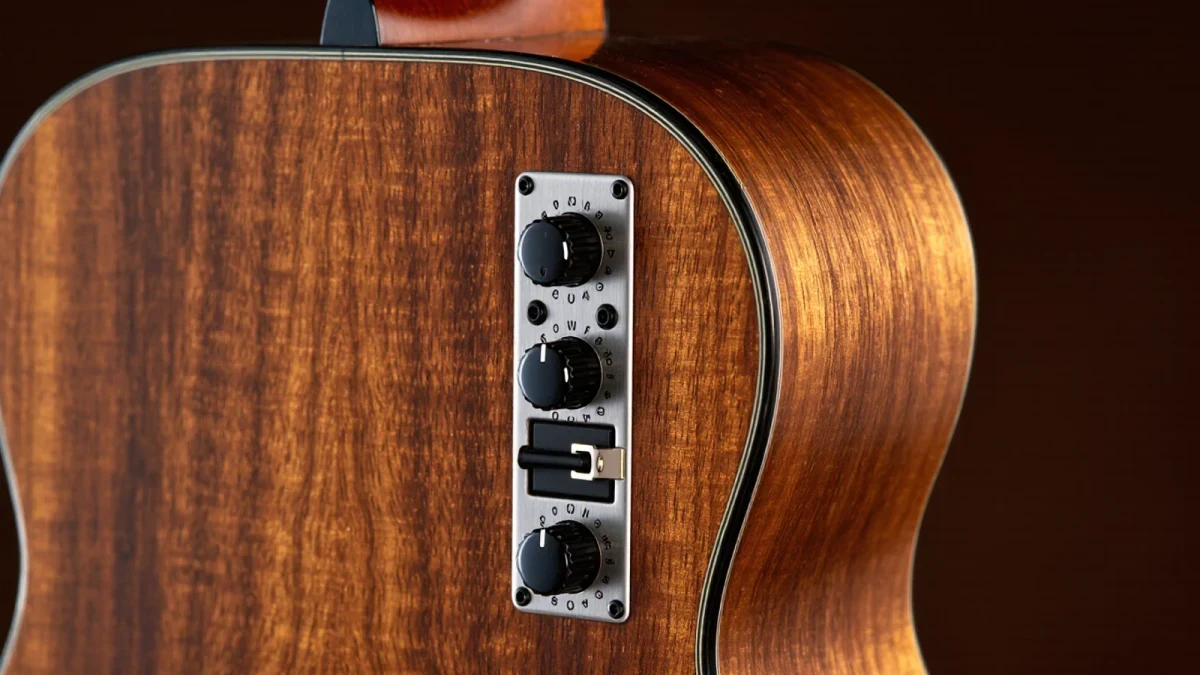
Per the makers' documentation: Taylor's Expression System 2 places three body-sensing pickups behind the saddle, a design Taylor describes as capturing string pressure vertically and horizontally — the maker's acoustic 'expression', in its own language. LR Baggs' Element system, documented by both LR Baggs and Breedlove, is an under-saddle film sensor with a discrete preamp the makers describe as low-profile. Takamine's Palathetic pickup, documented across decades of the maker's literature, mounts a sensor block beneath the saddle and pairs it with preamps built into the upper bout. Yamaha's A-series systems per its sheets combine an under-saddle pickup with digital processing the maker describes as mic-modeling derived from studio techniques. Fishman's Sonitone and Presys — documented in hundreds of makers' spec sheets beyond this comparison — place volume and tone controls in the soundhole rim or upper bout respectively. These are genuinely different sensor placements, and each maker argues its own is the most natural-sounding — a claim every one of them makes and none of them measures.
| Model (per maker sheets) | Pickup system (documented) | Sensor type | Controls | Street price (Sweetwater, Jul 2026) |
|---|---|---|---|---|
| Taylor 114ce | Expression System 2 | 3x behind-saddle body sensors | Volume, tone | $899 |
| Breedlove Discovery S Concert CE | LR Baggs EAS | Under-saddle film sensor | Volume, tone (documented) | $599.99 |
| Yamaha A1R | A-series SRT-derived system | Under-saddle plus processing | Volume, 3-band, auto feedback control | $749.99 |
| Takamine GD30CE-12 (6-string sibling GD30CE) | TP-4D preamp | Palathetic under-saddle block | Volume, 3-band, tuner | $499.99 |
What are the strengths and trade-offs of each system?
ES2 strengths, per Taylor: the most detailed published design in this group; behind-saddle placement the maker claims reduces the quack associated with under-saddle piezos. Trade-offs: the claim is Taylor's own — no supplied test verifies it; replacement parts route through Taylor's ecosystem. LR Baggs EAS strengths: LR Baggs' documentation is industry-standard, and the system's simplicity — one film sensor, minimal controls — means fewer documented failure points. Trade-offs: fewer voicing options than the three-band systems here. Yamaha's A-series strengths: documented EQ plus the maker's feedback-control feature, useful on loud stages. Trade-offs: the digital processing character is a maker's description, not a measured result. Takamine TP-4D strengths: the documented built-in tuner on the preamp — genuinely useful and the only one in this table — plus a sensor design in production for decades. Trade-offs: the Palathetic's bright amplified character is the maker's own documented positioning, which Takamine describes as clear rather than warm.
Does the guitar underneath still matter?
Yes, and the sheets say how much. All four guitars document solid spruce tops — Taylor 114ce (solid sitka, layered walnut back), Breedlove Discovery S (solid sitka, laminate sapele), Yamaha A1R (solid spruce, laminate rosewood-patterned back), Takamine GD30CE (solid spruce, laminate back). Unplugged, the documented differences are wood and finish; plugged in, the sensor between strings and cable carries most of the signal chain, which is why this guide spends its words there. The honest statement the makers' own sheets support: an electric-acoustic's amplified sound is a product of the pickup system and preamp, and no solid-wood upgrade fixes a sensor you dislike. Nothing in the supplied sources measures how much of the guitar's acoustic character survives the pickup — a gap the makers paper over with claims like 'natural' and 'authentic', words this guide repeats only as attributed claims.
Which electric-acoustic for which player?
Gigging player under $1,000 who plugs in weekly: the Taylor 114ce at $899, on the strength of the best-documented system and the widest service network. Player who gigs occasionally and wants value: the Breedlove Discovery S Concert CE at $599.99 brings LR Baggs electronics to the cheapest documented point in this group, and the concert body the maker documents as comfortable suits smaller frames. Player fighting feedback at open mics and loud rooms: Yamaha A1R's documented feedback suppression at $749.99 is the only sheet here that names the feature. Budget first-plug-in player: the Takamine GD30CE at $499.99 includes the documented onboard tuner and three-band EQ, the practical stage feature set at the lowest price. What the sources did not establish: side-by-side amplified sound quality, feedback thresholds in decibels, and long-term preamp reliability — none of that is in any supplied sheet. Choose the documented architecture that matches your stage, verify the price is current, and let your ears make the final call in the store, where no spec sheet can follow you.
How do batteries and feedback controls compare?
The spec sheets document the practical details that decide whether an electric-acoustic survives a gig. Every system in this comparison runs on a 9-volt battery mounted inside the body or in the preamp housing, per the makers' sheets, with documented life measured in tens of playing hours — Fishman's documentation across its Sonitone and Presys families and LR Baggs' Element literature both treat battery replacement as routine end-user maintenance. Two documented conveniences separate the group: Takamine's TP-4D includes the onboard tuner, and Yamaha's A-series documents an automatic feedback reduction feature that notches offending frequencies — the only sheet in this group that names feedback control at all, and a meaningful one for players near PA speakers. Battery access differs: preamp-mounted batteries change in seconds per the makers' instructions, while internally mounted ones require reaching through the soundhole, which the sheets describe but no one enjoys. The documented best practice every maker repeats: unplug the instrument cable when not playing, because the jack completes the circuit and drains the battery on the stand. None of this is glamorous, but it is the difference between a system that works at the gig and one that dies before the second set.