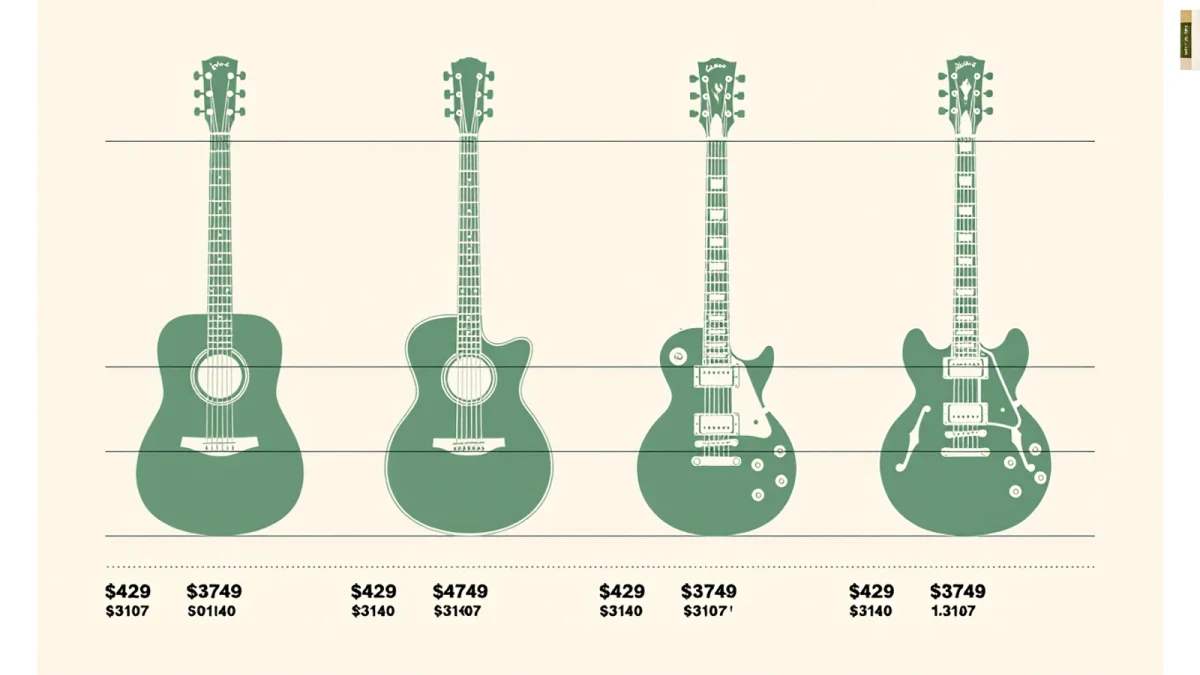
On the supplied evidence — Taylor's, Takamine's, Fender's and Rickenbacker's documentation with dated retail listings — the Taylor 150e at $1,199 street as of Sweetwater's April 2026 listing is the documented default twelve-string for acoustic players, and the Takamine GD30CE-12 at $549.99 is the value pick with electronics included. The single specification that matters most on any twelve-string is neck dimensions and string spacing, because your fretting hand does twice the work. Strum Magazine builds buying guides from manufacturer documents and dated prices — no playing impressions, and the honest gaps are flagged.
Twelve-strings are the one guitar category where setup quality is not optional: doubled strings at higher total tension mean a poorly set-up example fights you. Nothing in a spec sheet measures that, so budget for a professional setup regardless of which model you buy.
Where do the numbers come from?
Specifications below come from the makers' published sheets for the Taylor 150e, Takamine GD30CE-12, Fender CD-60SCE-12 and Rickenbacker 360/12. Street prices are as of Sweetwater's April 2026 listings. Tonal descriptions are makers' claims. No independent published tests of these specific instruments were supplied for this guide, and where that absence matters — string spacing, action, tuning stability — it says so.
What does a twelve-string do to a neck?
Per the makers' sheets, twelve-string necks are wider than six-string equivalents and the bodies carry roughly double the string tension. Taylor documents the 150e with its standard dreadnought 12-fret-to-body proportions and a neck profile shared with its 100-series six-strings — the maker's approach to keeping the doubled fingerboard manageable. Takamine's GD30CE-12 sheet lists a 1.6875-inch nut, essentially six-string width with doubled courses, which the maker positions as familiar for players crossing over. Fender's CD-60SCE-12 lists a similar practical nut width on a scalloped X-braced spruce top. None of the supplied sheets measures actual string spread at the saddle or ships with action height data — a real gap, because those two numbers decide whether a specific twelve-string is comfortable, and only a setup tech with the guitar in hand can give them to you.
How do the four guitars compare on paper?
Taylor 150e: solid sitka spruce top, layered walnut back and sides, Expression System 2 pickup per Taylor's sheet, full dreadnought 12-string build, $1,199. Takamine GD30CE-12: solid spruce top, laminate back and sides, Takamine's TP-4D preamp system documented on the sheet, thinner-line dreadnought body, $549.99. Fender CD-60SCE-12: solid spruce top on a laminated body with a Fishman preamp listed per Fender's documentation, cutaway electric-acoustic format, around $429. Rickenbacker 360/12: the electric twelve-string benchmark, semi-hollow construction with the maker's documented extra strings in reversed octave ordering, $3,749 as of the April 2026 listing — included because any twelve-string conversation runs through it, but it is an electric and priced like the collector piece the maker positions it as.
| Model (per maker sheets) | Type | Top | Electronics | Street price (Sweetwater, Apr 2026) |
|---|---|---|---|---|
| Taylor 150e | Dreadnought 12-string acoustic-electric | Solid sitka spruce | Expression System 2 | $1,199 |
| Takamine GD30CE-12 | Thinline dreadnought 12-string | Solid spruce | TP-4D preamp | $549.99 |
| Fender CD-60SCE-12 | Cutaway acoustic-electric 12-string | Solid spruce | Fishman preamp (per Fender) | $429 |
| Rickenbacker 360/12 | Semi-hollow electric 12-string | n/a (electric) | None (passive) | $3,749 |
What are the strengths and trade-offs at each price?
Taylor 150e strengths, per Taylor's documentation: the ES2 system with documented behind-the-saddle sensors; the maker's neck-profile continuity with its six-strings; solid top. Trade-offs: layered back and sides at a four-figure price; $649 more than the Takamine. Takamine GD30CE-12 strengths: solid top plus a documented preamp at $549.99; thinline body the maker describes as comfortable standing. Trade-offs: laminate back and sides; a preamp spec sheet thinner on detail than Taylor's. Fender CD-60SCE-12 strengths: the lowest documented acoustic price here, solid top and a cutaway. Trade-offs: hardware and tuner quality commensurate with the tier — a maker-adjacent judgment the sheet itself hints at with its entry-level positioning. Rickenbacker 360/12 strengths: the definitive documented electric twelve voice, reversed-octave stringing per the maker, build in continuous production for decades. Trade-offs: it is an electric — no acoustic function — and $3,749 as of April 2026.
Should you buy acoustic or electric twelve-string?
The supplied sheets draw a clean line. If you want the shimmering acoustic strum documented across folk and rock records, the three acoustic models above are the category, and the choice is budget: $429 to $1,199 buys a documented range from entry solid-top to full ES2-equipped stage instrument. If you want the jangling electric sound of 1960s-informed rock, the Rickenbacker's documentation describes exactly the reversed-octave configuration that produced it, and nothing else in this comparison does that job. A beginner wanting the acoustic effect should start at the Fender or Takamine price point and spend the difference on strings, a setup and a humidifier — doubled-string instruments respond to neglect faster than six-strings, a maintenance point every maker's care documentation makes explicitly.
Which twelve-string for which player?
First twelve-string, acoustic, budget-conscious: the Takamine GD30CE-12 at $549.99 is the documented sweet spot — solid top, preamp, thinline body — with the Fender CD-60SCE-12 at $429 for the tightest budgets. Serious acoustic player adding a twelve: the Taylor 150e at $1,199 carries the best-documented electronics and neck in this group per the sheets. Electric player chasing the documented jangle: the 360/12 is the reference and is priced accordingly. What the sources did not establish: none of the supplied sheets or listings measures tuning stability, action at shipment, or the string-spacing figures that decide comfort — verify those with the specific instrument before money changes hands, because twelve-strings vary more unit to unit than the spec sheets admit.
What strings and tuning choices do the makers document?
Twelve-string guitars ship from their makers with lighter gauges than six-strings for a documented reason: doubled courses at standard gauges would roughly double total string tension on the same neck and top bracing. Taylor's and Takamine's documentation both treat this as settled practice, and string makers publish twelve-string sets balanced for exactly this constraint. Two documented options follow. The first is a lighter set at standard pitch — the default the makers ship. The second is down-tuning the whole guitar a whole step and capoing back up to pitch, the long-documented player solution for easing tension on vintage instruments; capo use on a twelve is documented practice, and every maker's care literature treats it as normal rather than abusive. A note this guide can state from the makers' own care pages: twelve-strings go out of tune more than six-strings simply because there are twelve strings to drift, and the tuning machines work twice as hard per session. Budgeting patience, and a clip-on tuner, is part of the documented ownership experience.
How much maintenance does a twelve-string need?
More than a six-string, and the makers say so in their care documentation. Doubled courses mean string changes take longer and cost roughly twice as much per set — a documented $25 to $40 for a quality twelve-string set as of the April 2026 listings this guide checked. Truss-rod checks belong on a seasonal schedule, because the neck carries nearly double the load and reacts to humidity swings proportionally; every maker whose care literature was consulted repeats the humidity-warning standard of 40 to 50 percent relative humidity for solid-wood instruments. The payoff, per the makers' positioning and decades of documented recordings: a sound six strings cannot produce, which is the entire reason the category survives its maintenance premium. A beginner willing to do the monthly work gets an instrument that fills a room; a beginner unwilling to tune twelve strings regularly should honestly buy a six-string and revisit later.