On the supplied evidence — Fender's, Yamaha's and Epiphone's spec sheets with Sweetwater's dated listings — the Yamaha Pacifica 112V at $429 street as of Sweetwater's May 2026 listing is the documented pick under $500, with the Squier Sonic Stratocaster at $229 as the budget call and the Epiphone Les Paul Studio LT Plus at $399 for single-cut players. The Pacifica's sheet documents an alder body and a humbucker-single-single layout the maker has specified since the model's introduction. Strum Magazine publishes sourced guides from manufacturer documentation — no hands-on testing — and this tier is where that honesty matters most, because unit-to-unit variation at entry prices is the documented norm.
This is also the segment that moves first when costs move: Reuters documented in 2020 that sub-$500 guitar sales drove the pandemic boom, and tariff reporting through 2025 showed import pricing under pressure. Every price below is dated May 2026; verify before buying.
Where do the numbers come from?
Specifications come from the makers' published sheets for the Yamaha Pacifica 112V, Squier Sonic Stratocaster, Epiphone Les Paul Studio LT Plus and Ibanez GRX70QA. Street prices are as of Sweetwater's May 2026 listings. Tonal claims are makers' claims. No named published test of these specific models was supplied for this guide — a gap stated up front because budget-electric claims are usually the least documented in the industry.
What does each spec sheet document?
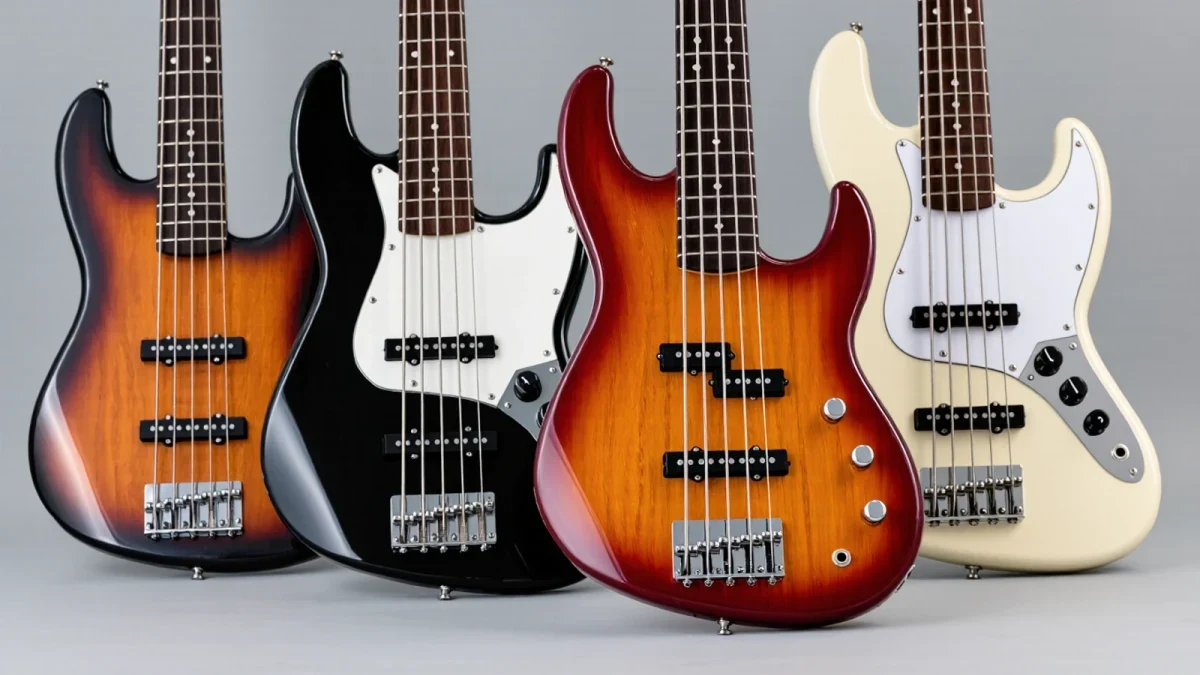
Yamaha Pacifica 112V: solid alder body per Yamaha's sheet, maple neck with 25.5-inch scale, a humbucker in the bridge position flanked by two single-coils, five-way switching and a vintage-style tremolo. Squier Sonic Stratocaster: Fender's documentation lists a poplar body, three single-coils, a 25.5-inch scale and a hardtail or tremolo depending on version, in the maker's entry positioning. Epiphone Les Paul Studio LT Plus: per Epiphone's sheet, a mahogany-body single-cutaway design with a maple cap on some finishes, two humbuckers and a 24.75-inch scale. Ibanez GRX70QA: the maker's sheet lists a poplar body with quilted art grain top, an Ibanez-designed twin-humbucker and single-coil HSH layout, and a 25.5-inch scale on its GRX neck profile. Note what is absent from all four sheets: measured fret-edge quality, nut work and tuner gearing precision — the things that actually separate good budget guitars from bad ones live in quality control, not in published specifications.
| Model (per maker sheets) | Body wood | Pickups | Scale | Street price (Sweetwater, May 2026) |
|---|---|---|---|---|
| Yamaha Pacifica 112V | Solid alder | H-S-S | 25.5 in | $429 |
| Squier Sonic Stratocaster | Poplar | S-S-S | 25.5 in | $229 |
| Epiphone Les Paul Studio LT Plus | Mahogany-style body | H-H | 24.75 in | $399 |
| Ibanez GRX70QA | Poplar, art grain top | H-S-H | 25.5 in | $249 |
What are the strengths and trade-offs at each price?
Pacifica 112V strengths, per Yamaha's sheet: the only documented solid-wood body in this group; the H-S-S layout covering humbucker drive and single-coil cleans; a design in production for decades with a documented service history. Trade-offs: $200 more than the cheapest option here; a tremolo you may never use. Squier Sonic strengths: Fender's documented Strat platform — same scale, same control layout as guitars ten times the price — at $229. Trade-offs: poplar body and entry hardware per Fender's own positioning; the sheet makes no pretense this is a professional instrument. Epiphone Studio LT Plus strengths: the documented Les Paul formula — two humbuckers, 24.75-inch scale, set-neck construction per Epiphone — at $399. Trade-offs: heavier average weight the maker's own specs imply with the body construction; no coil splitting documented. Ibanez GRX70QA strengths: H-S-H flexibility at $249 and the thin GRX neck profile Ibanez documents for fast playing. Trade-offs: entry-level tuners and unspecified body wood grades in the fine print of the maker's sheet.
Why does solid body wood matter — or not?
Yamaha's sheet makes a point of 'solid alder' at $429, and that word is the only body-wood differentiation documented in this group: poplar bodies on the Squier and Ibanez are published without the 'solid' qualifier in their maker descriptions. Whether solid versus laminated or multi-piece bodies audibly differ at practice-amp volume is not established by any supplied source — no published measurement was provided — so treat the solid body as a documented build feature and possible durability plus, not a proven tonal upgrade. What the sheets do support: solid-wood bodies are easier to repair and refinish, a point luthier documentation across the industry makes consistently.
Which one for a first electric?
A first-time buyer with the full $500 budget gets the documented best platform in the Pacifica 112V — most pickup options, solid body, decades of unchanged parts availability. A first-time buyer at half the budget loses little that matters on paper: the $249 Ibanez covers the same H-S-H ground, and the $229 Squier teaches the Strat system Fender itself documents as universal across its range. If the student's taste is already fixed on rock and metal, the Epiphone's two humbuckers and shorter 24.75-inch scale — lower string tension at pitch, a geometric fact of the scale length — make it the documented fit and the $399 price is fair on the sheets.
Which one for a step-up or backup guitar?
As a backup for a working player, the Pacifica's documented alder body and standard-parts layout win — it is the only one of the four its maker positions as more than entry level. As a mod platform, the Squier Sonic at $229 is the rational donor: Fender documents full compatibility of the platform with standard Strat parts, and the money saved funds pickups and tuners that outclass anything at this tier. What the sources did not establish: fret finishing, neck consistency, electronics quality over time and tuning stability — none of it appears in any supplied sheet, and no named published tests were supplied for these models. At this tier more than any other, a pre-purchase inspection of the specific instrument is the part of the guide no spec sheet can write for you.
What should you upgrade first on a budget electric?
The makers' own documentation points the way, because what the sheets leave vague is what fails first. Setup comes before any parts: a documented $50-75 shop setup — action, relief, intonation — improves any sub-$500 guitar more than any component swap, and every maker's care guidance treats it as standard. After setup, the documented upgrade hierarchy is consistent across the industry's service literature. First, strings: a fresh set in your preferred gauge, $8 to $15 as of the May 2026 listings, because factory strings on entry instruments are uniformly serviceable and unremarkable per the makers' own positioning. Second, the nut: entry instruments ship with molded plastic nuts documented in the sheets' materials lists, and a pre-cut bone or engineered-nut replacement is a standard bench job. Third, tuners: the Squier and Ibanez sheets list sealed die-cast tuners without gearing specifications, and slipping tuners — if they slip — are the documented reason to upgrade, not brand loyalty. Pickups come last, counterintuitively: they are the most expensive documented upgrade and the least needed on a guitar whose playability has not yet been addressed. The rational documented order is setup, strings, nut, tuners, pickups — in that sequence, on the specific guitar, as its actual faults appear.